Breathing RootsNurturing the Ebbs & Creeks
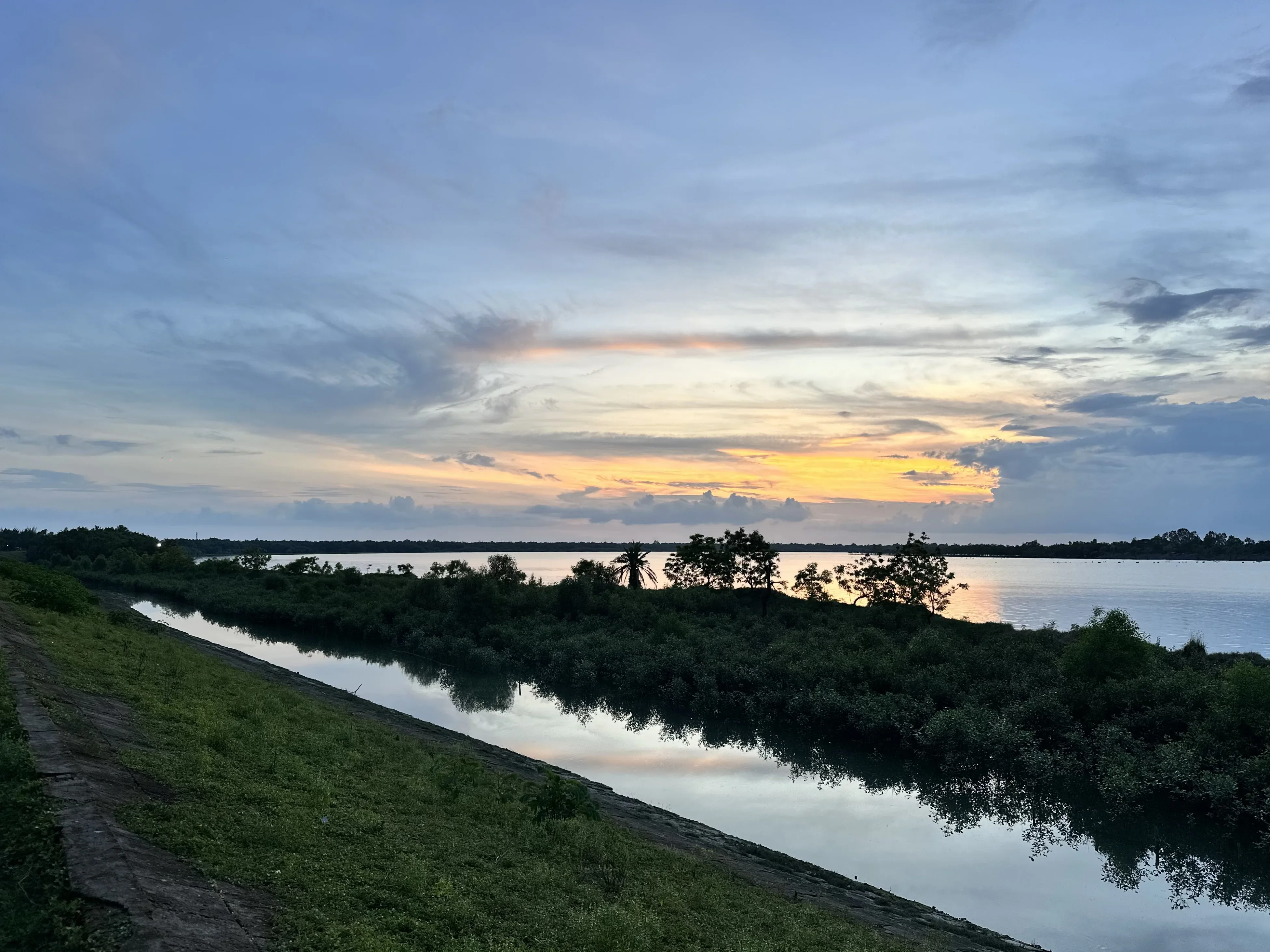
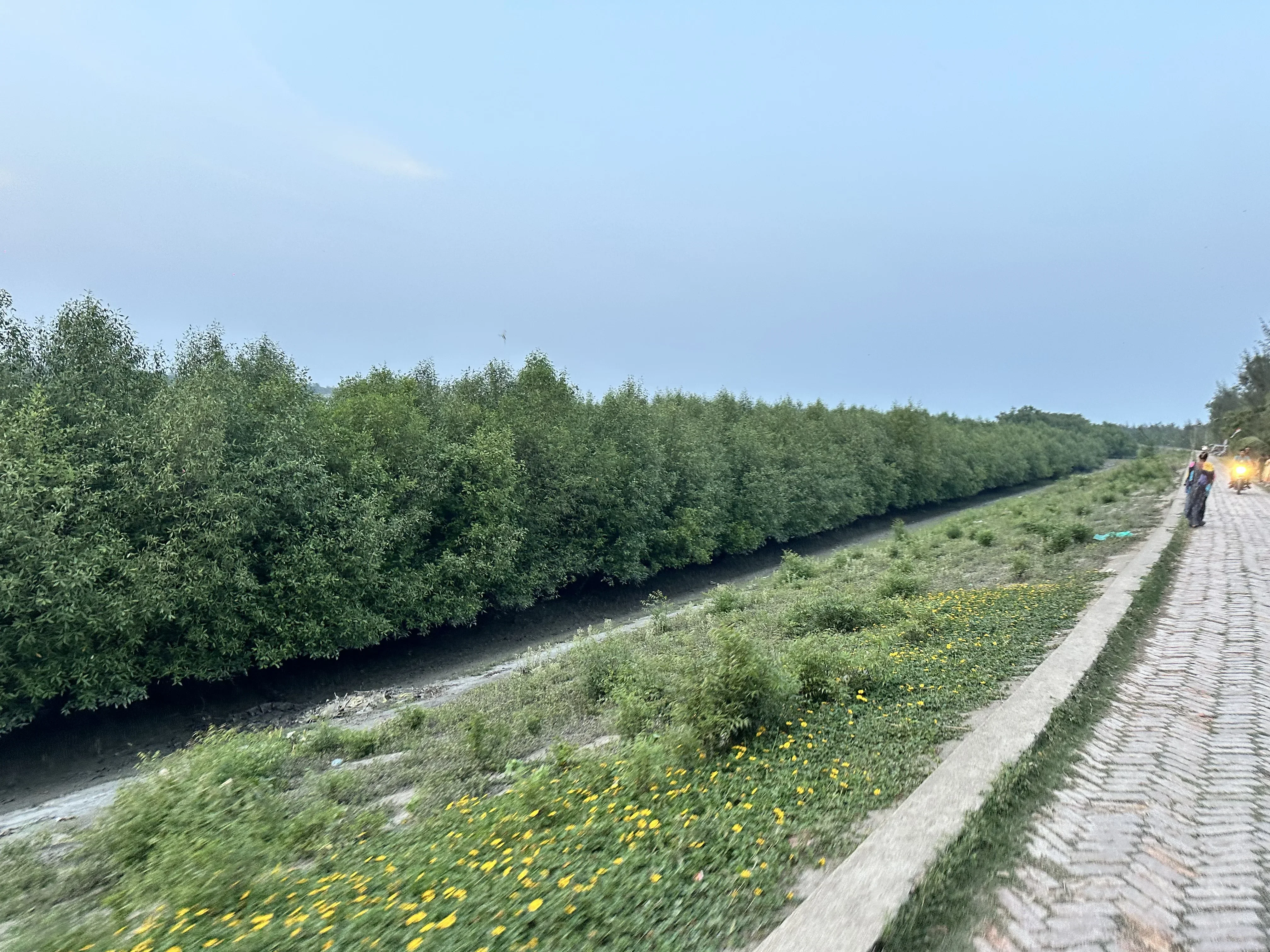
Mangroves along the Raimangal River at twilight.

Ecology

Sustainable Mangrove Plantation Programme

Community-led mangrove restoration supporting ecological resilience and local livelihoods in the Sundarbans.

9.85 lakh+

Saplings nurtured

6 km

Riverbank protected

450+

Families engaged

The beginning

River - The natural sower of the seeds

Mangrove restoration begins with understanding the tidal landscape. Seeds carried by the river meet concrete embankments instead of reaching the soil where natural regeneration can occur.

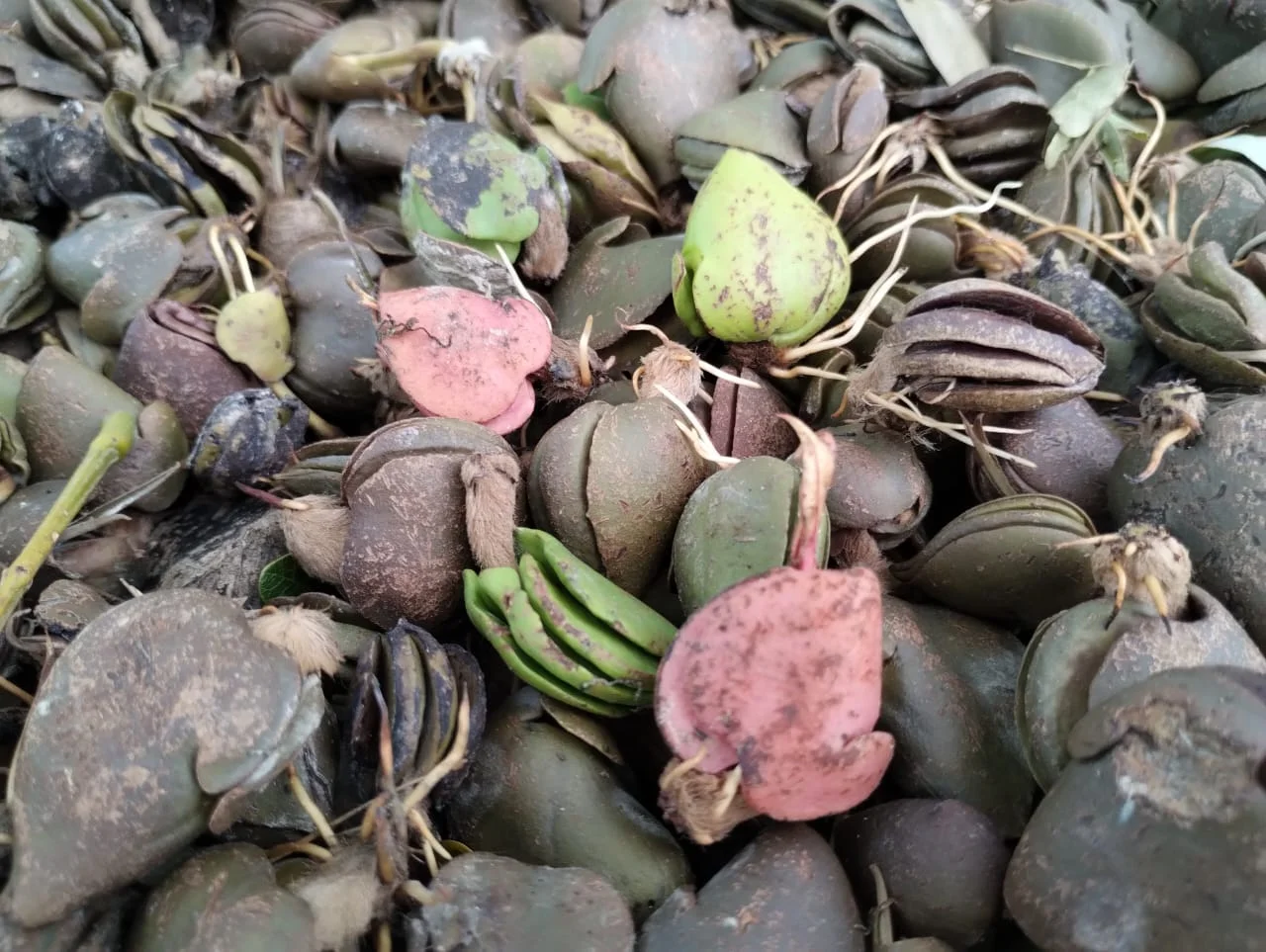
Breathing Roots collects these seeds and gives them a protected start in the nursery before returning young plants to suitable riverbank locations.
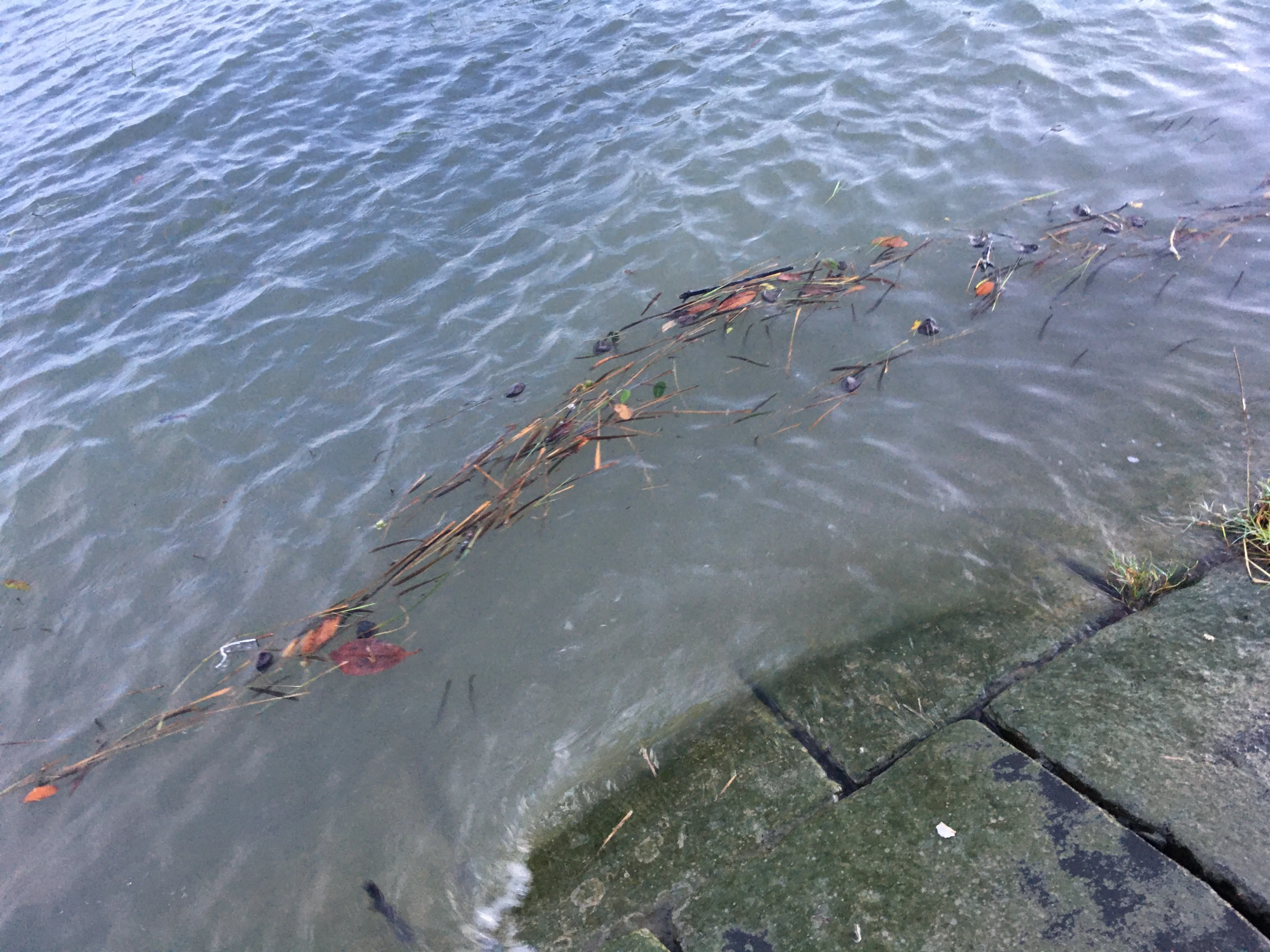
Mangrove seeds carried by river water along a concrete embankment
Mangrove seeds carried by the river meet a concrete embankment, preventing them from reaching soil where natural regeneration can occur.
Mangrove seeds collected from a river
Mangrove seeds collected from the river for nursery propagation.

Germination & nursery

A forest begins small

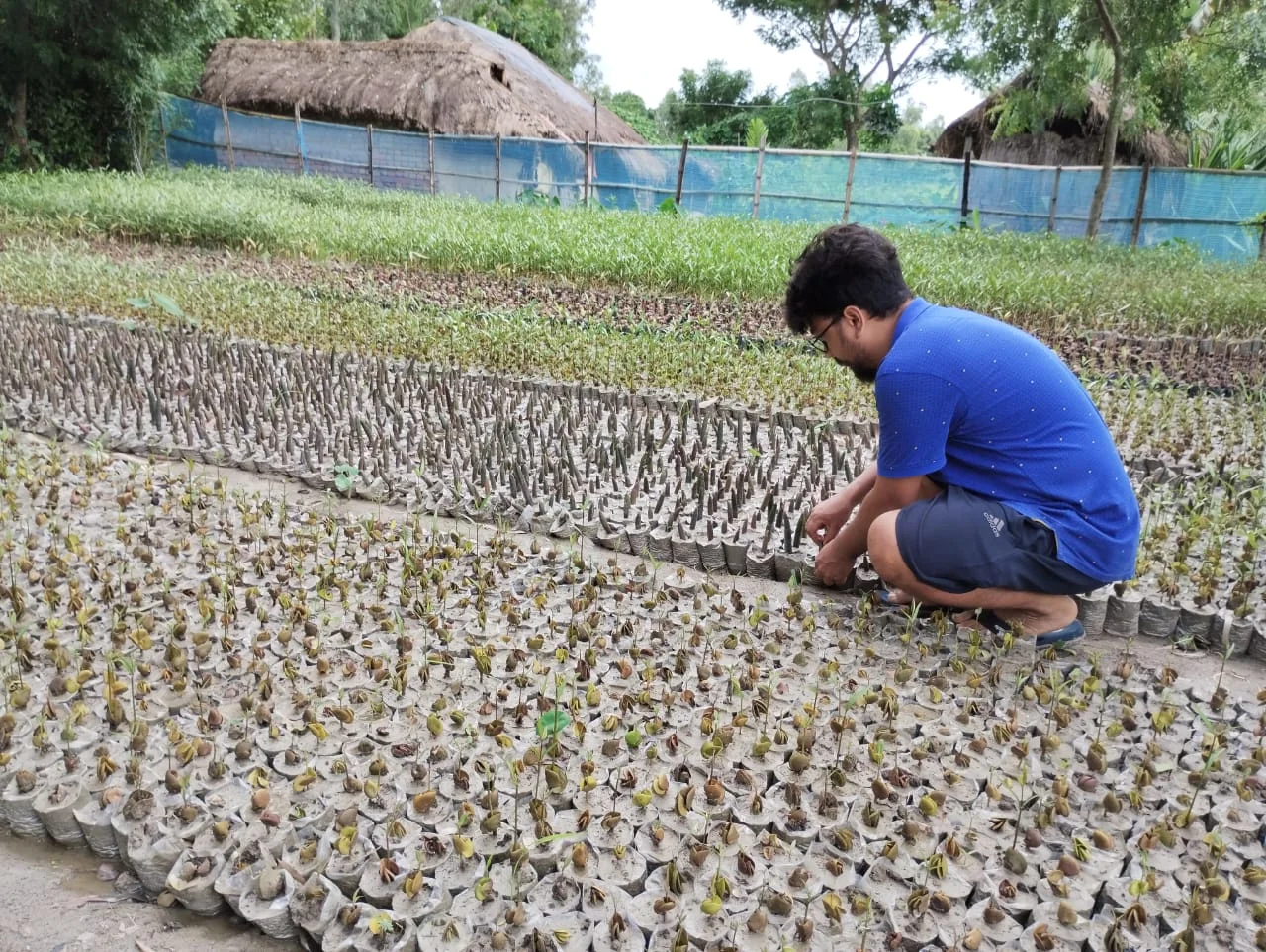
Seeds are germinated and cared for through their early growth. The nursery is where a fragile beginning becomes a plant strong enough to return to the riverbank.
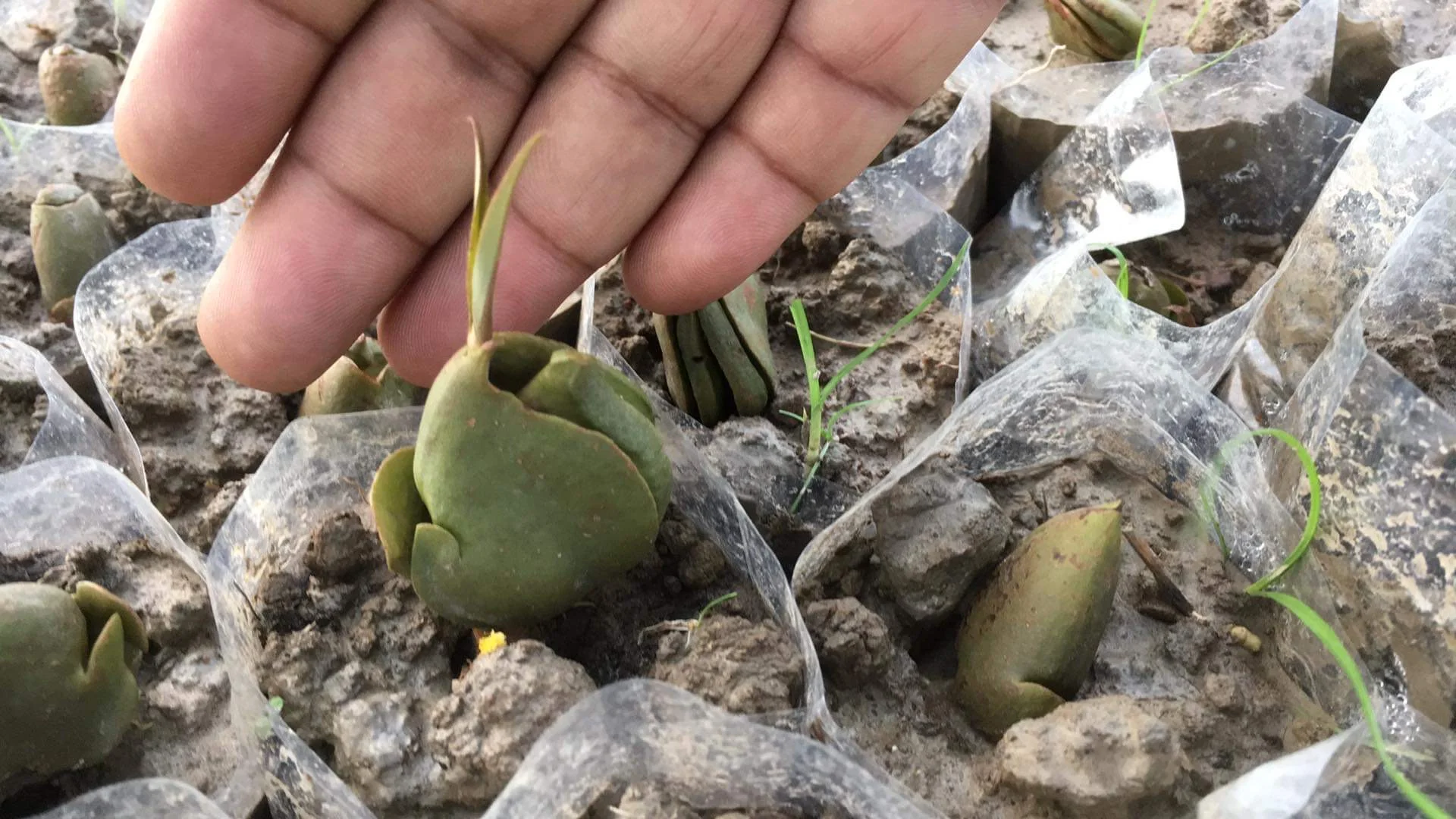
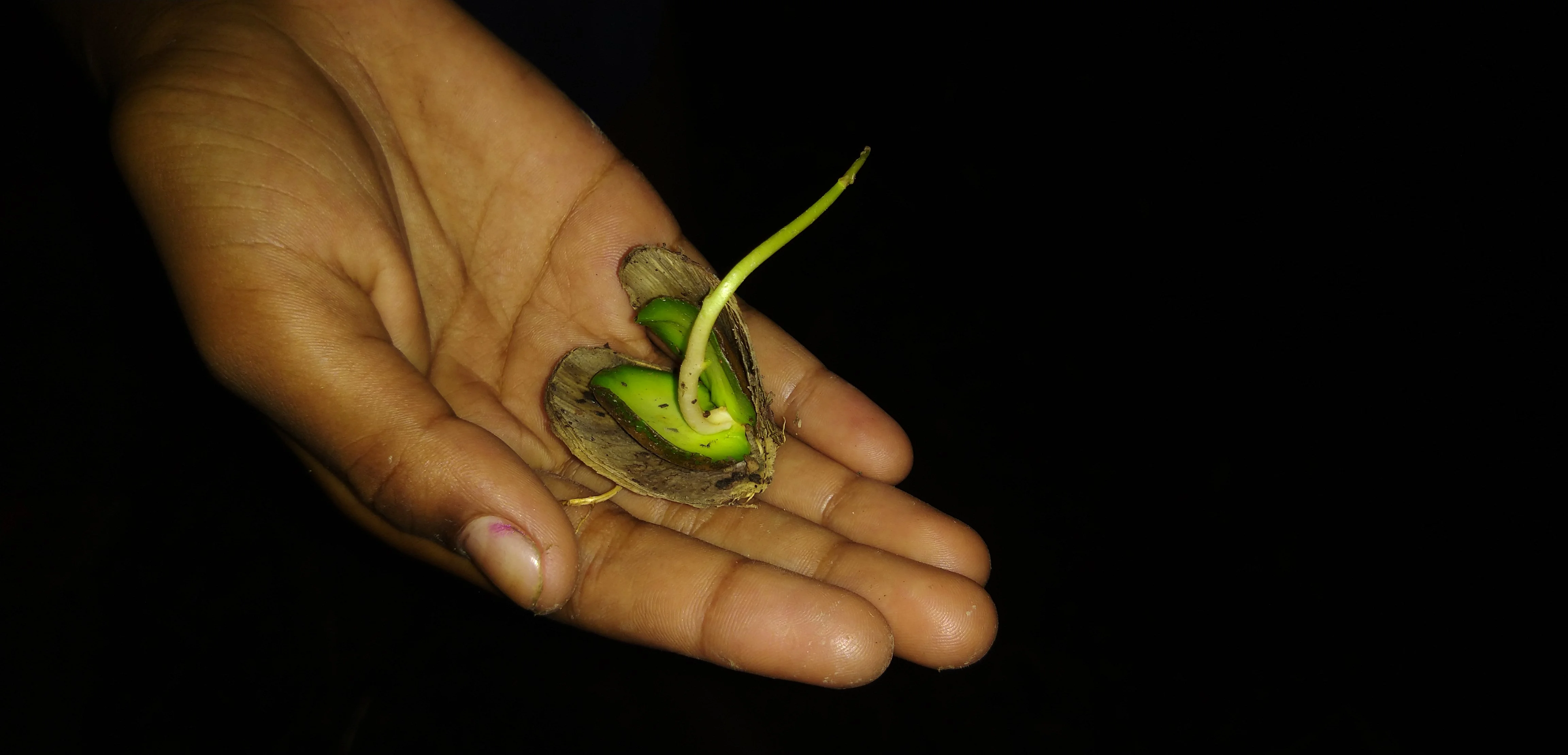
Germinated mangrove seeds after collection
Another view of germinated mangrove seeds after collection.
A newly germinated mangrove seed resting on a person's palm
A newly germinated mangrove seed resting on a palm, a small expression of the care involved in nurturing the next generation of mangroves.
A person caring for mangrove saplings in a nursery
Caring for young mangrove saplings in the nursery.
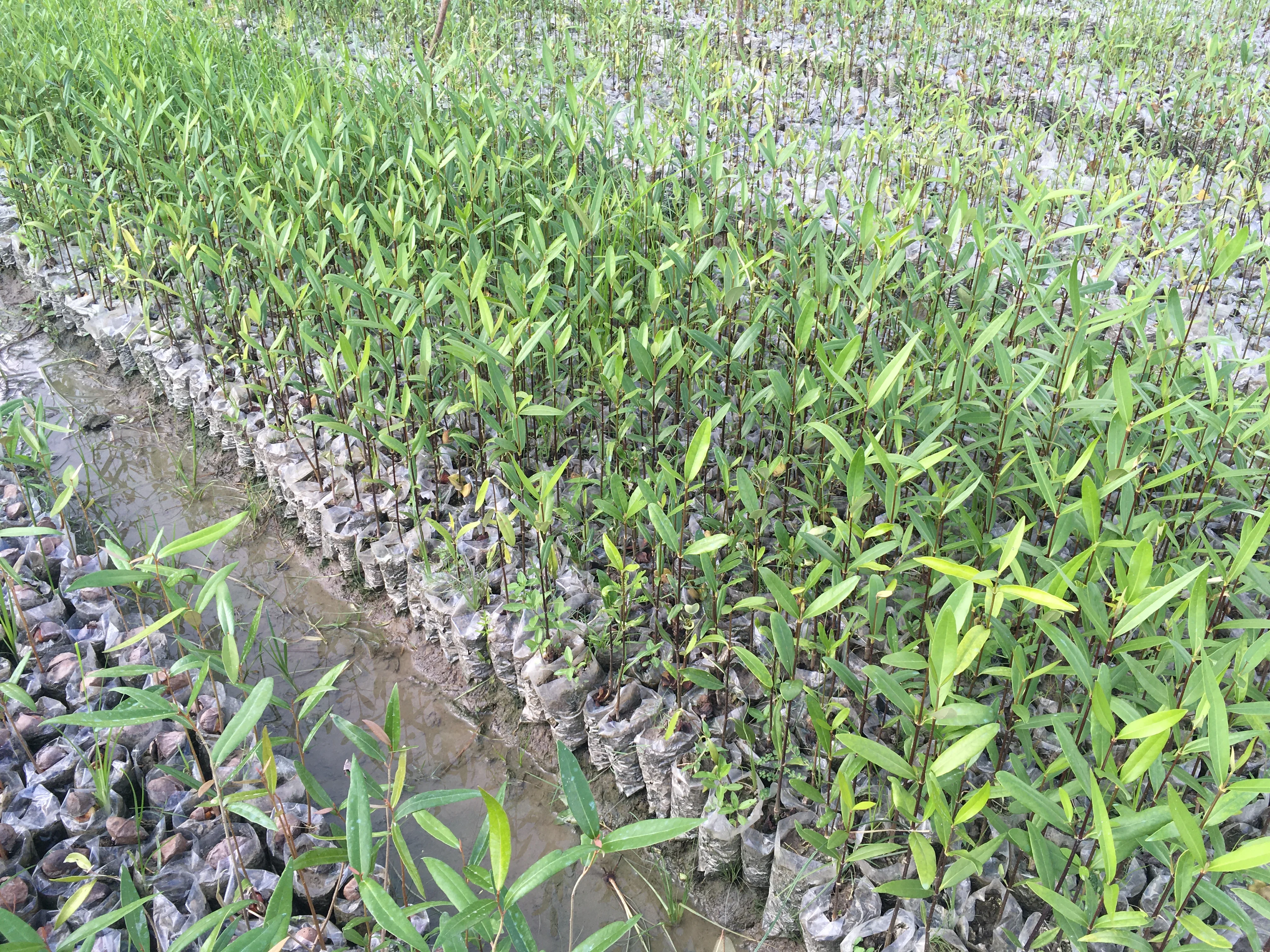
Grown mangrove saplings arranged in nursery rows
Mature mangrove saplings arranged in rows in the nursery.
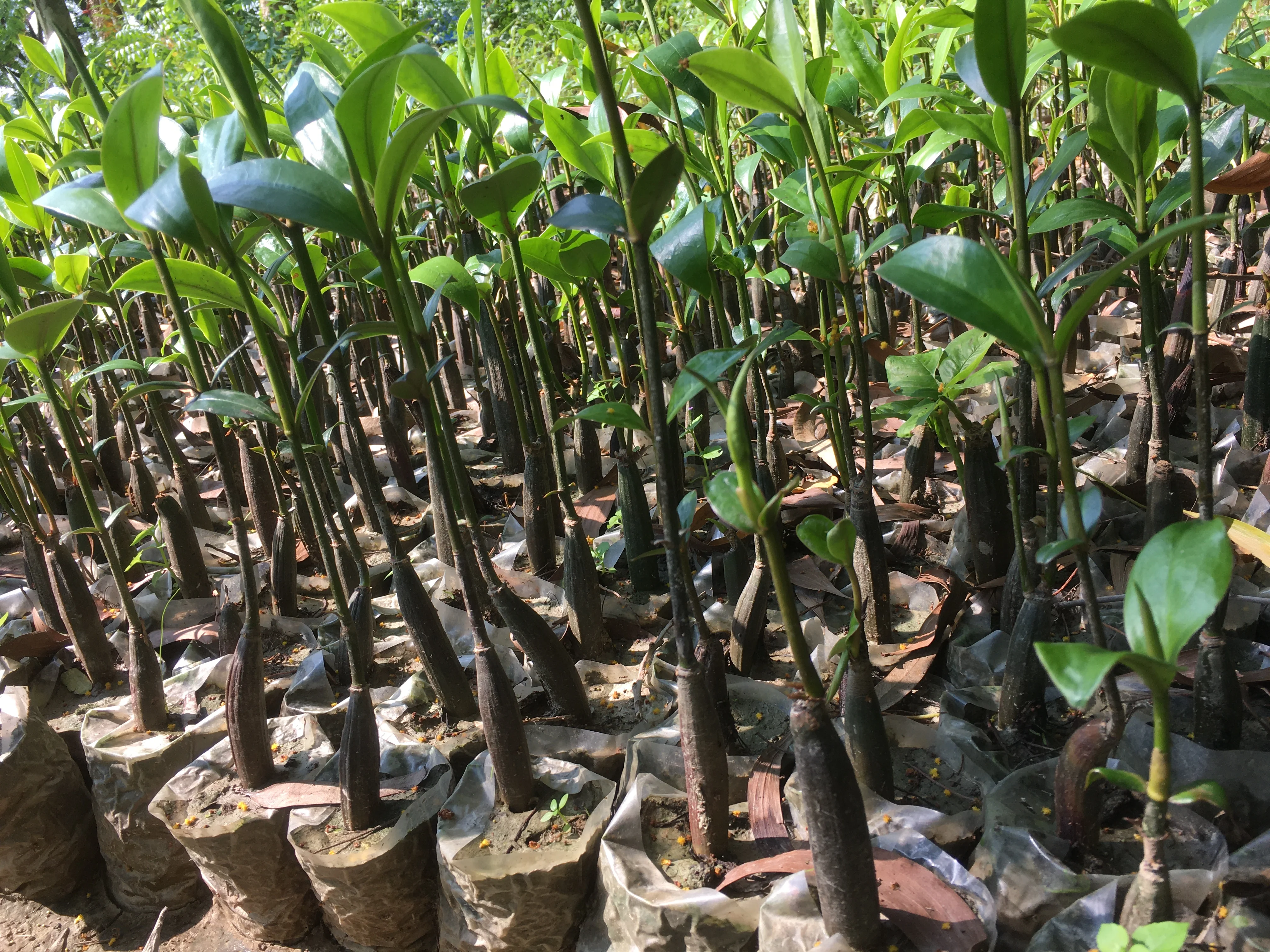
Mature mangrove saplings transferred to larger pots
Matured mangrove saplings transferred to larger pots as they grow.

Community

Restoration is collective work

Seed collection, nursery care, transportation and planting all depend on people working together across the landscape.
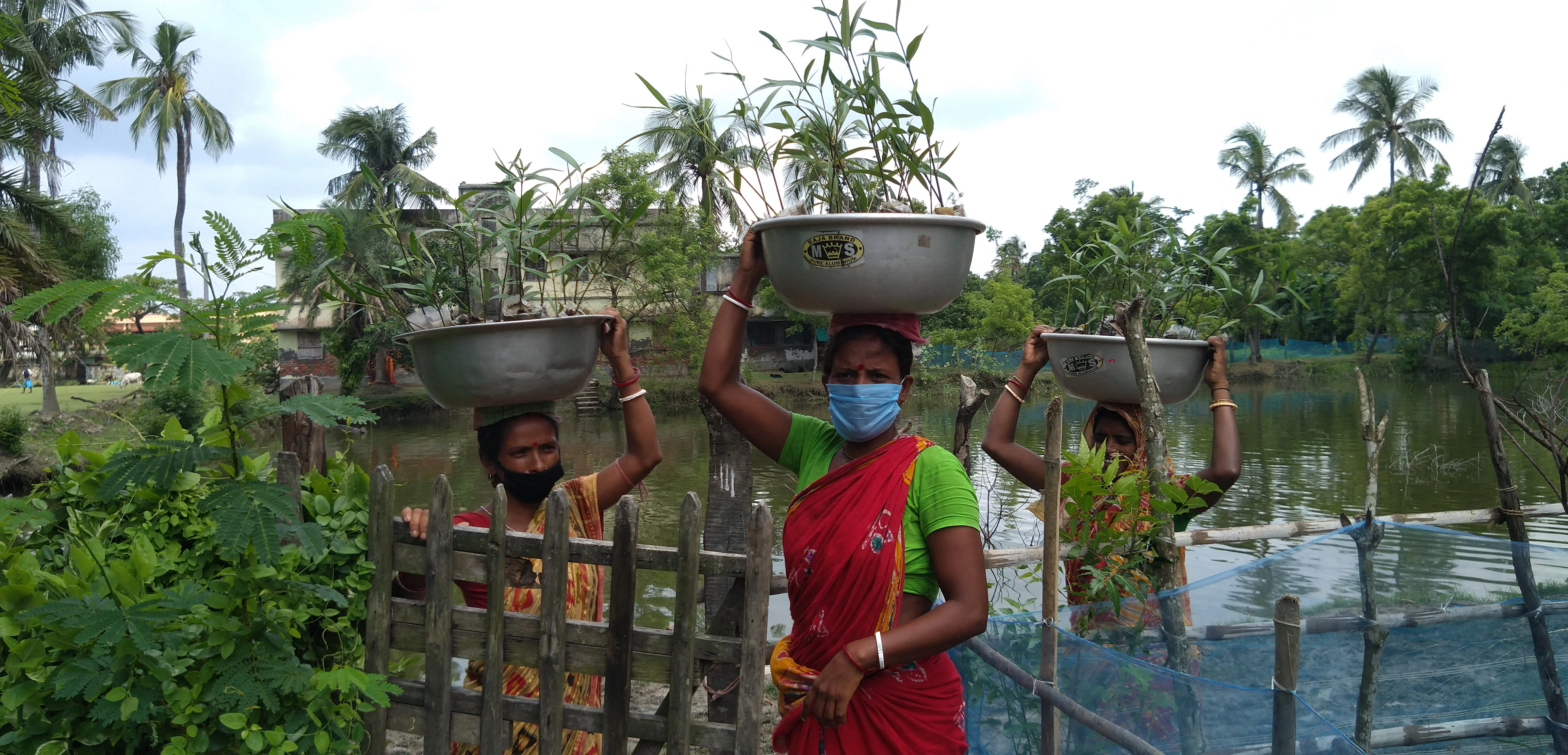
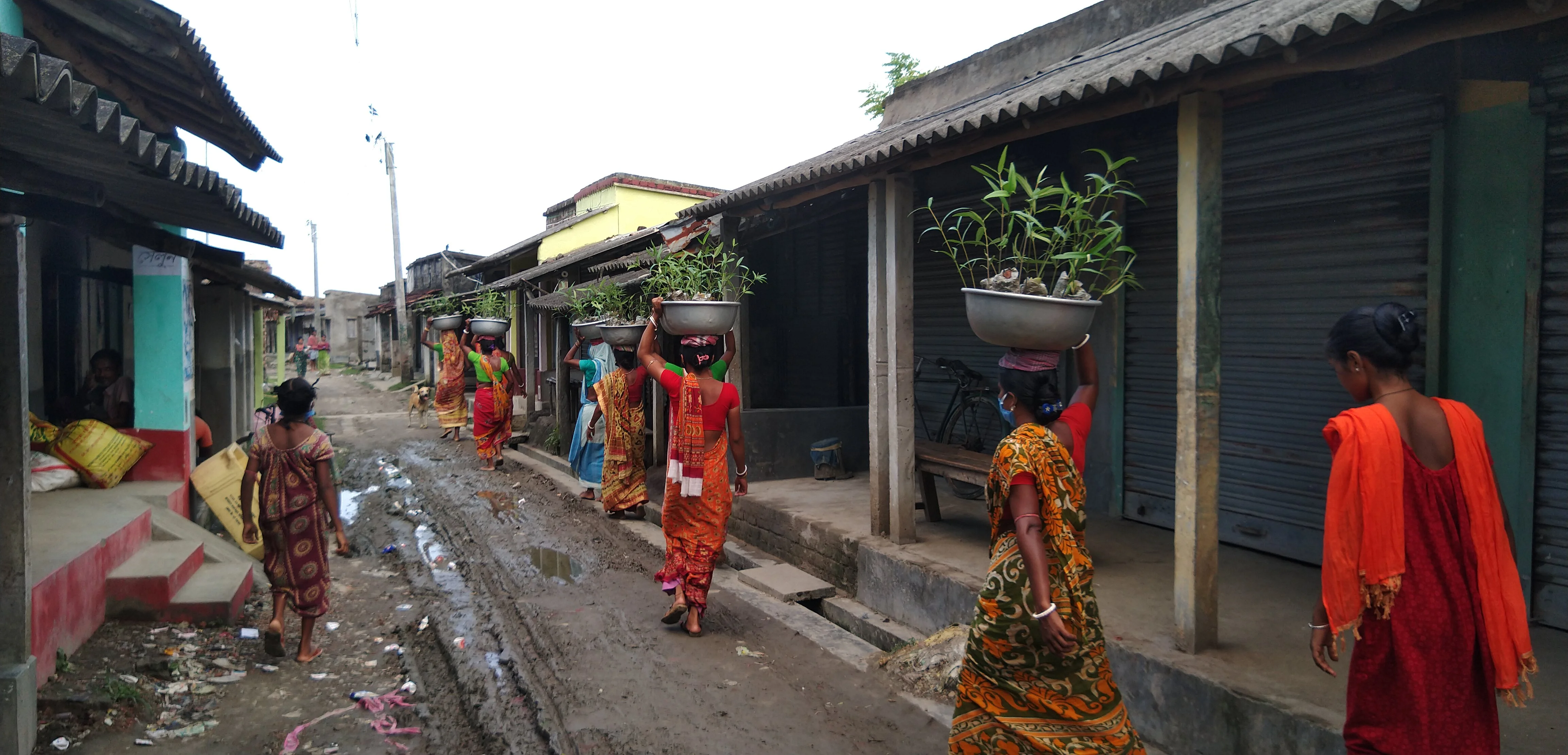
Women carrying mangrove saplings on their heads from the nursery
Women carrying mangrove saplings from the nursery for planting.
Women carrying mangrove saplings along a local market road
Women carrying mangrove saplings along the local road towards the plantation site.
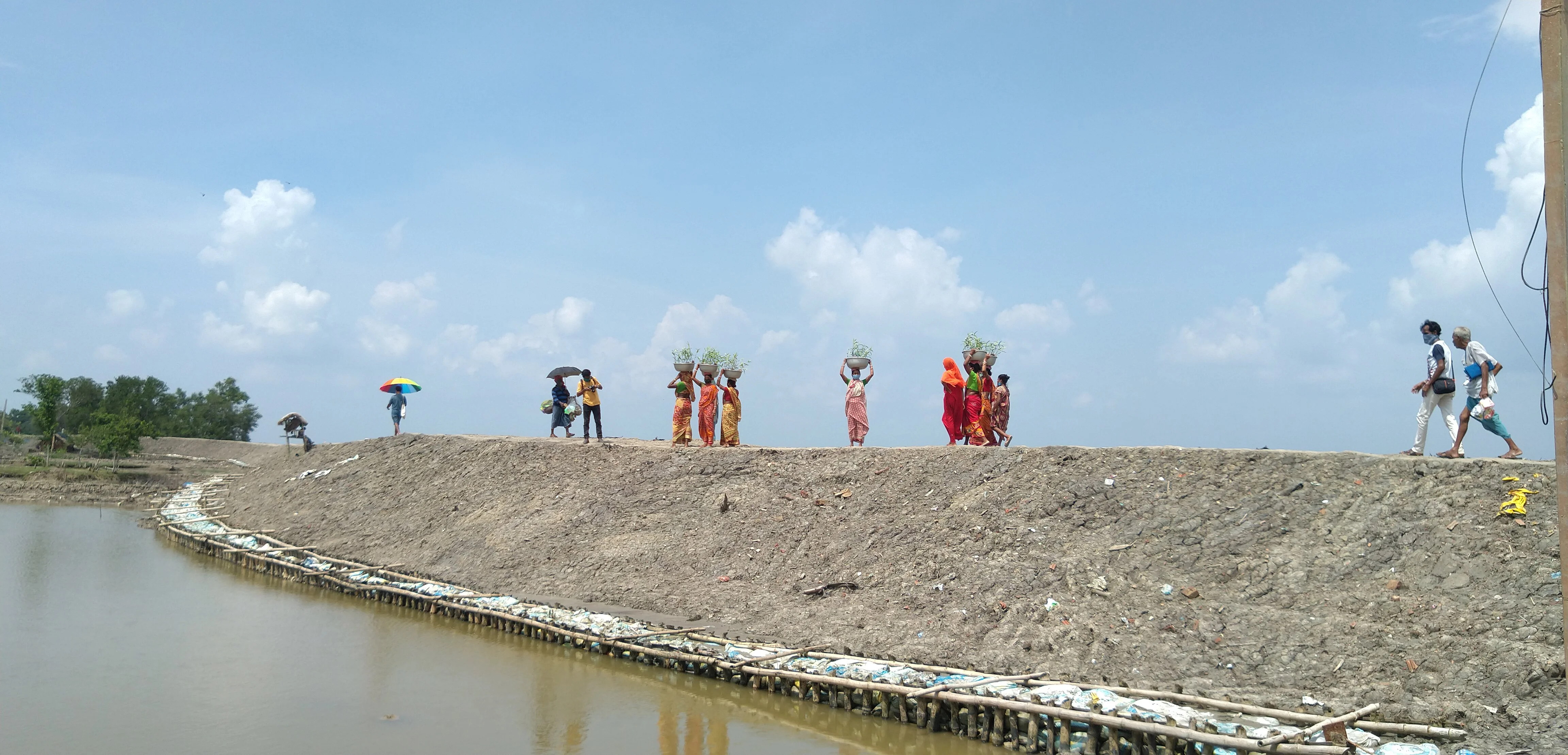
Women carrying mangrove saplings along a riverside embankment
The procession of saplings continues along the riverside embankment.
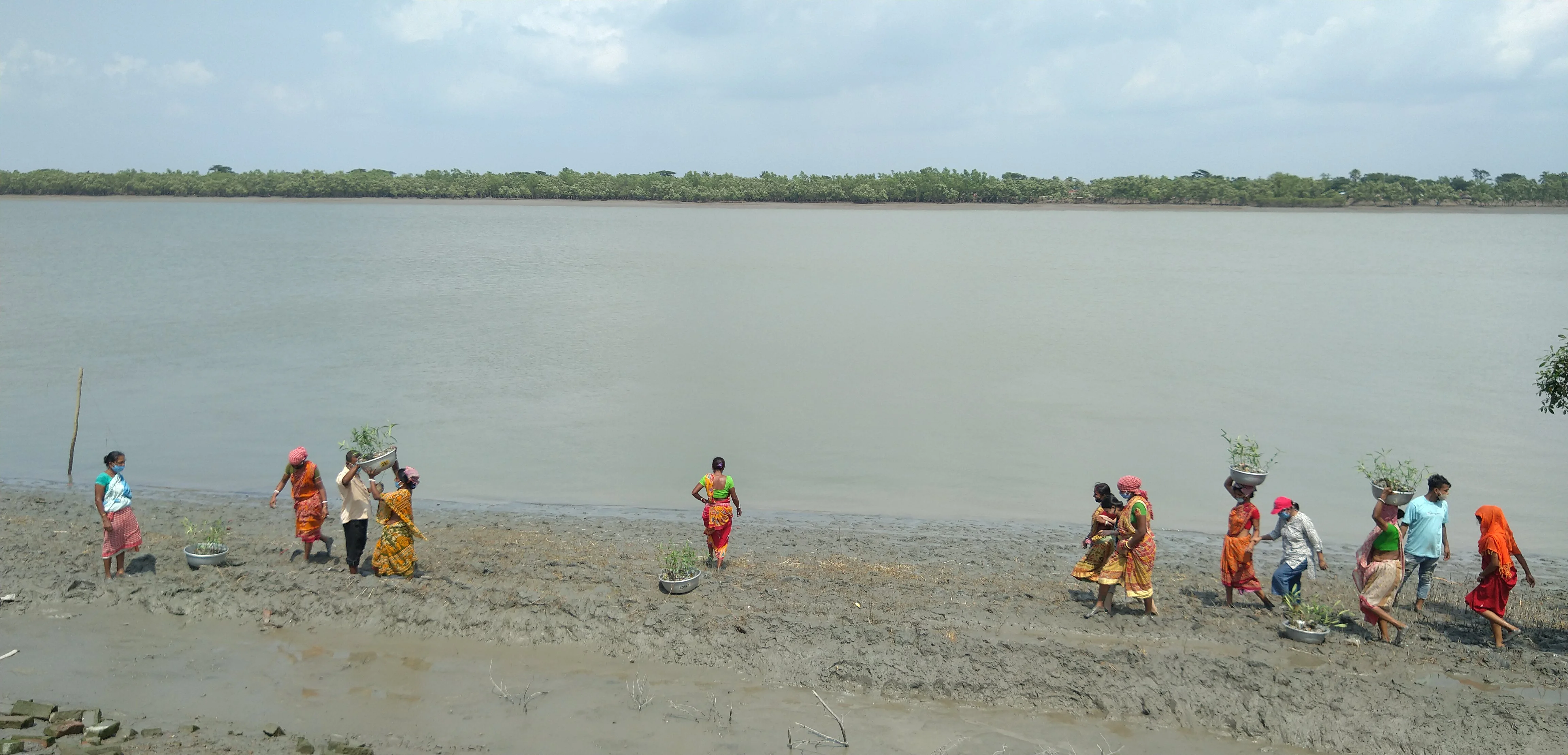
Women carrying mangrove saplings arriving at a riverside plantation site
The saplings arrive at the riverside plantation site.
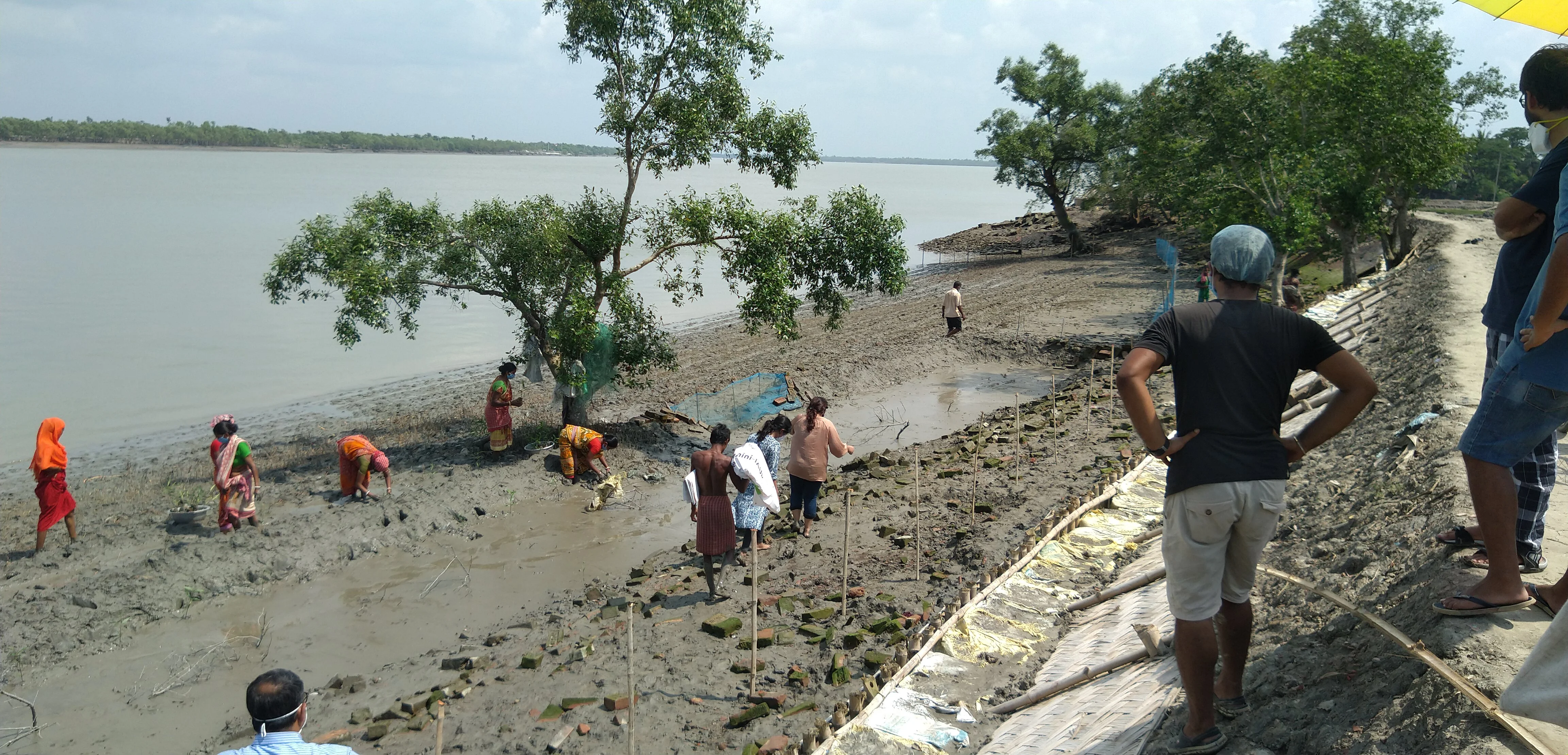
Villagers planting mangrove saplings at a riverside plantation site
The collected saplings being planted at the riverside plantation site.

Beyond planting

Planting is only the beginning

Newly planted mangroves need time and protection while their roots establish. The restoration story therefore continues beyond the day the saplings enter the soil.
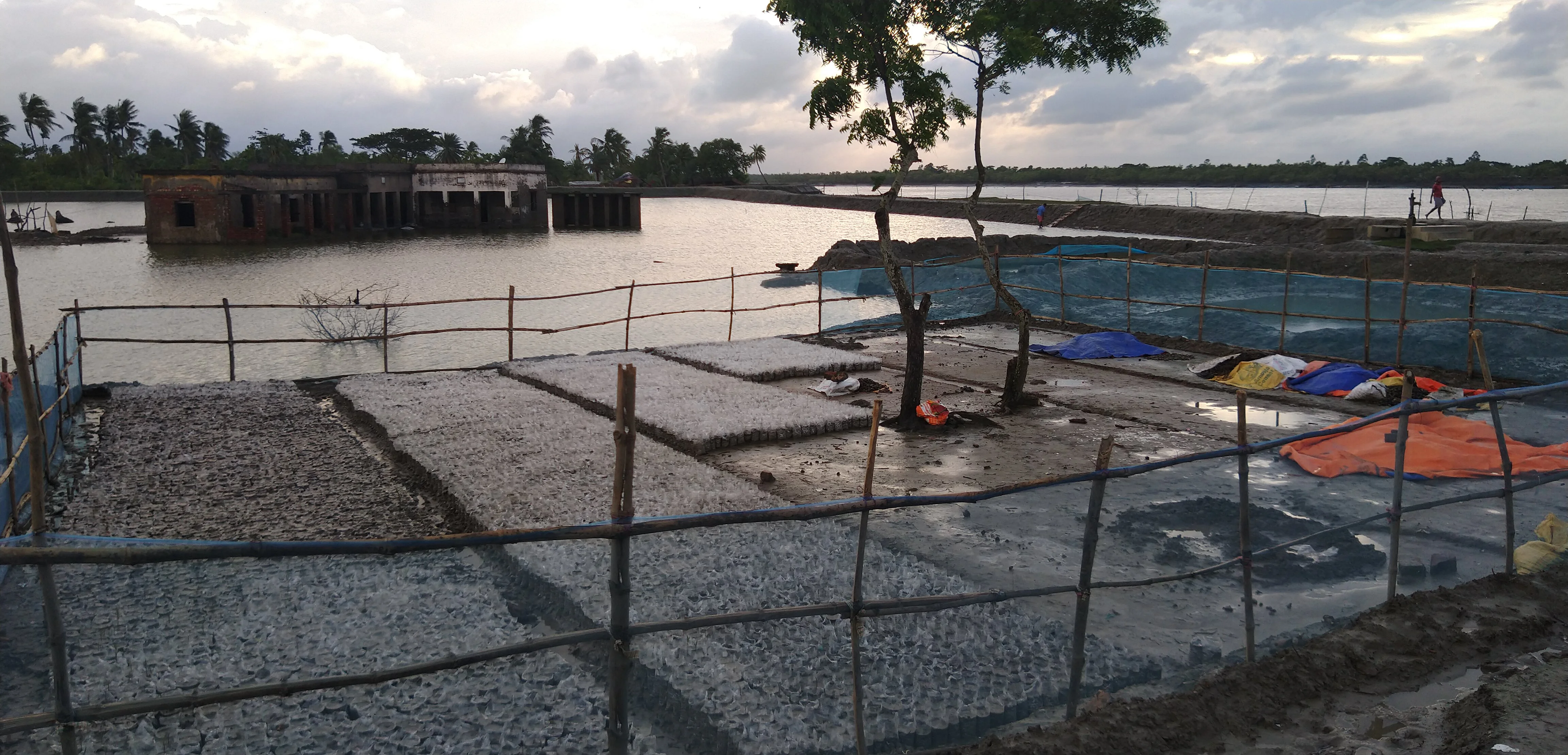
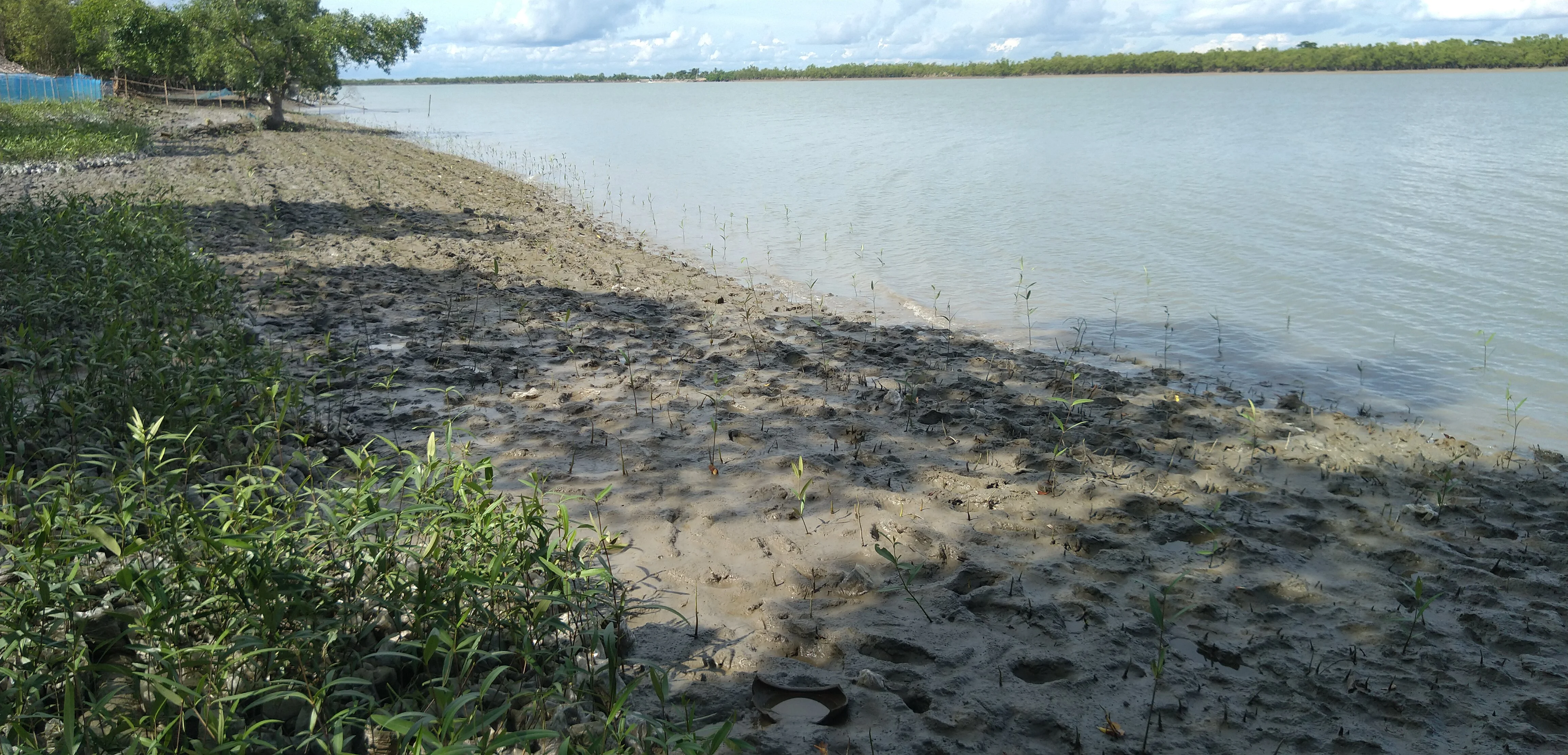
Riverbank mangrove plantation temporarily protected by fencing
A riverbank plantation temporarily fenced to protect the soil from erosion and the young plants from animals.
Mature mangrove plantation on a riverbank after fencing was removed
A matured riverbank plantation after the protective fencing has been removed.

The forest returns

What happens when the forest is given time?

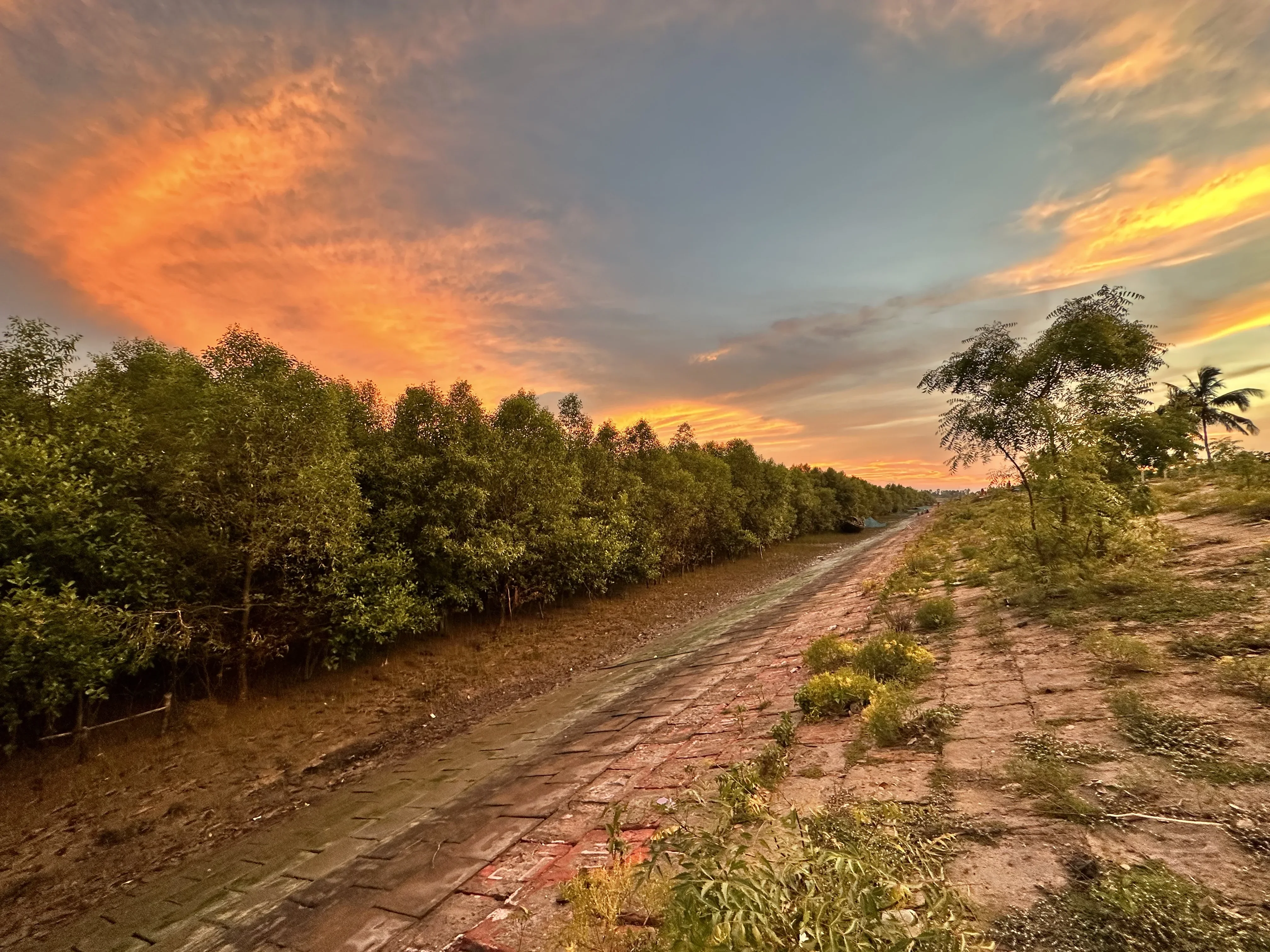
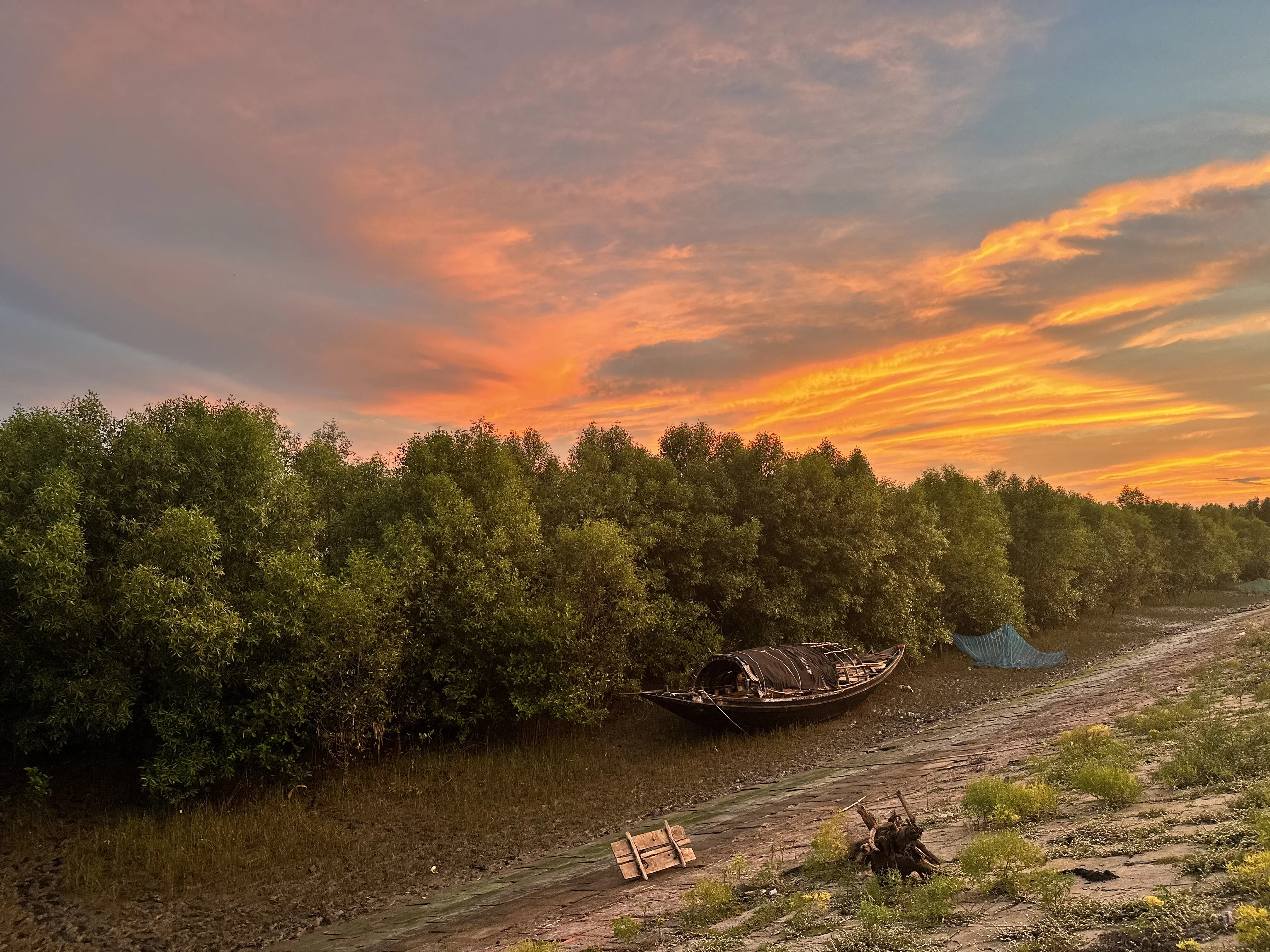
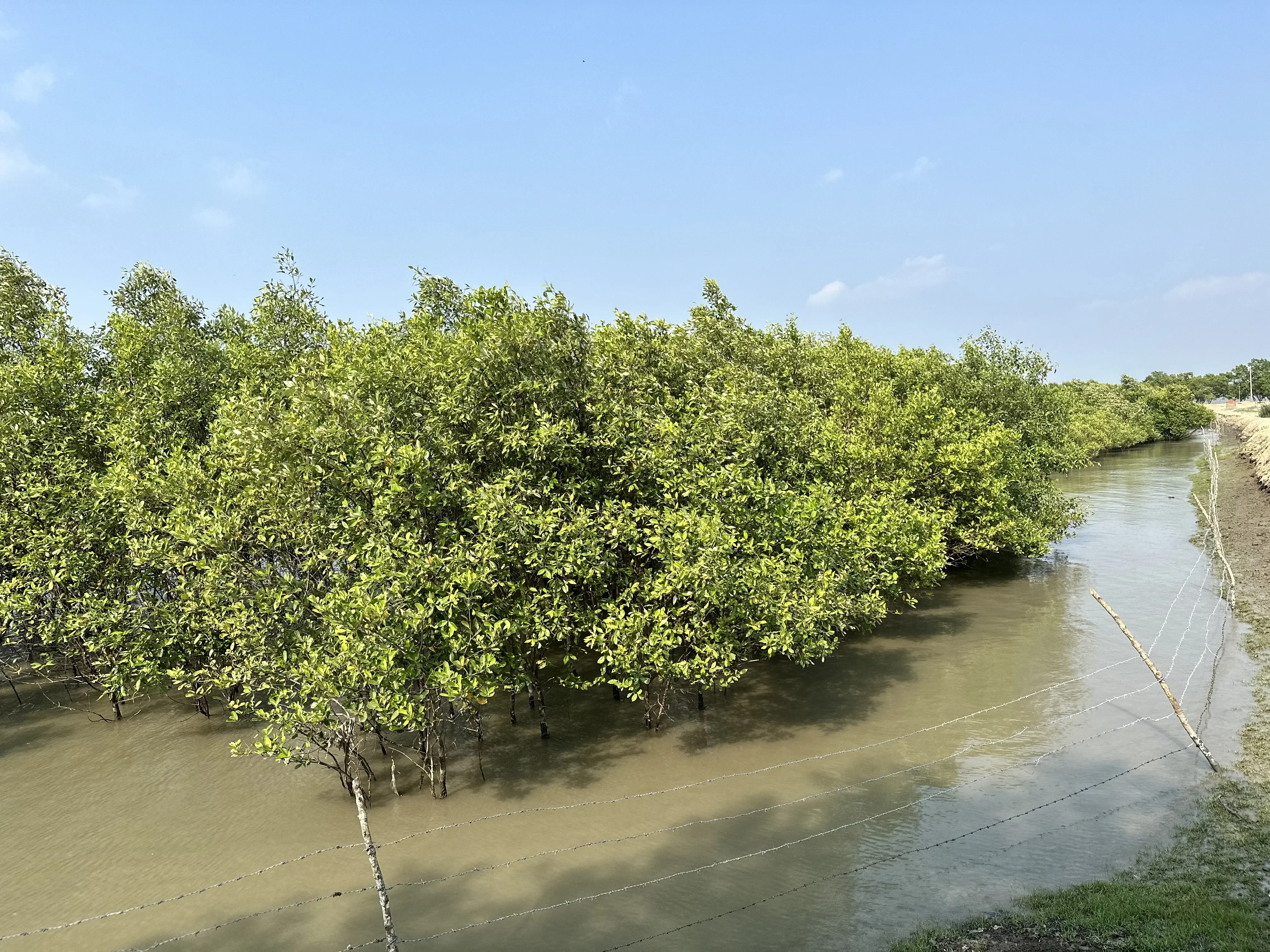
The 2026 project update shows the plantation at an established stage: a continuous belt of mangroves along the Raimangal River, standing between the river and the land behind the embankment.
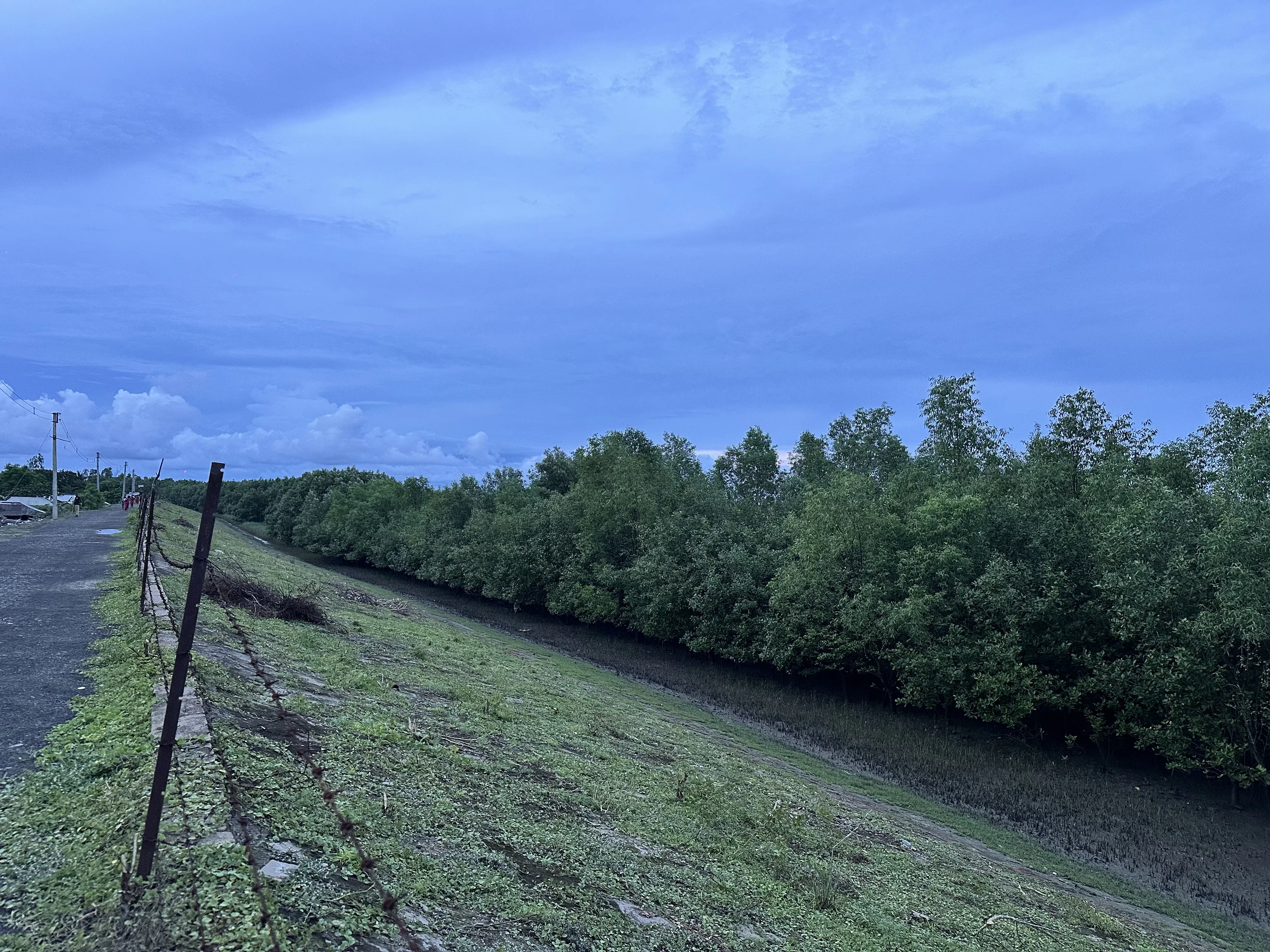
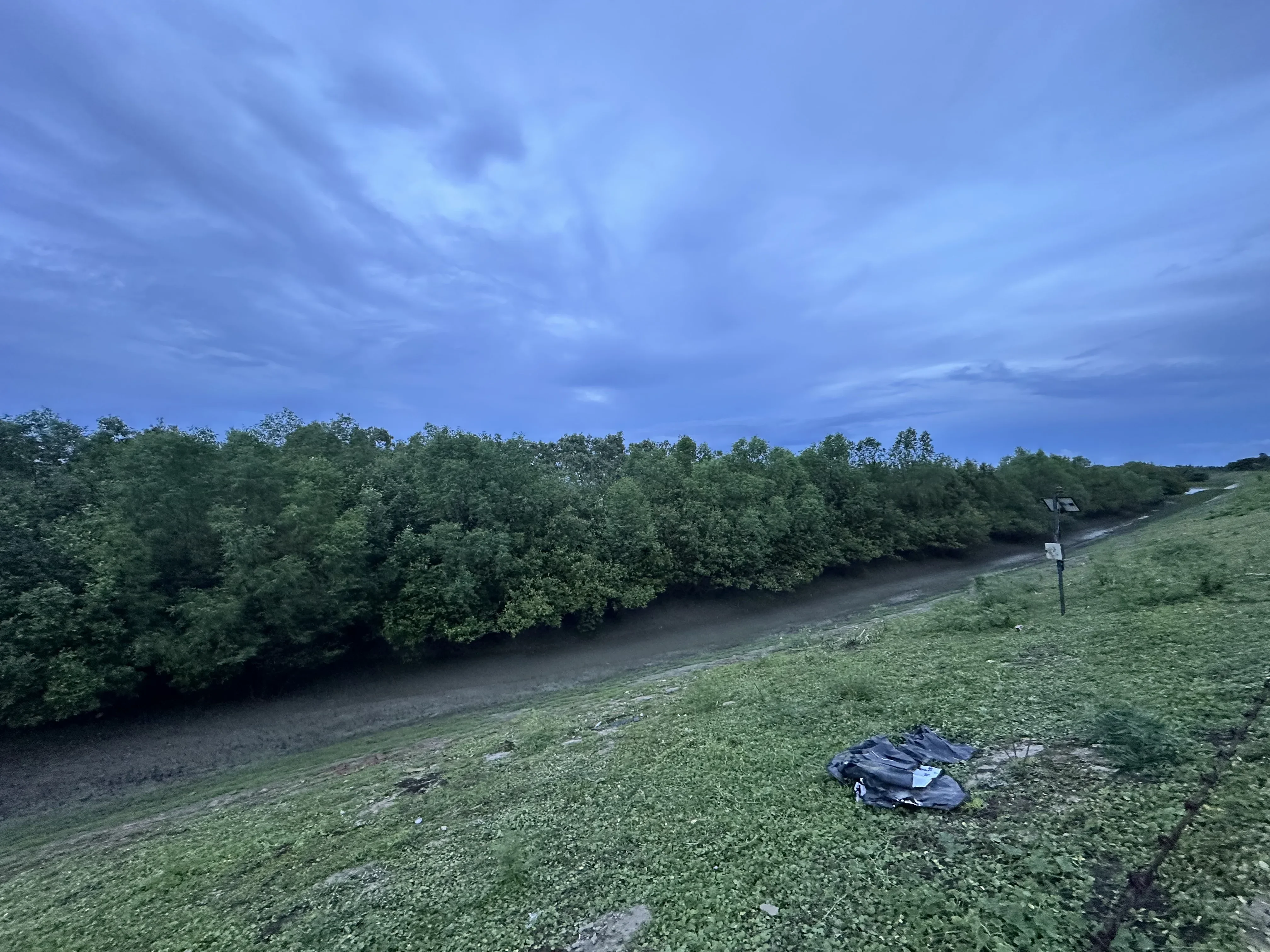
Mangroves along the Raimangal River at twilight.
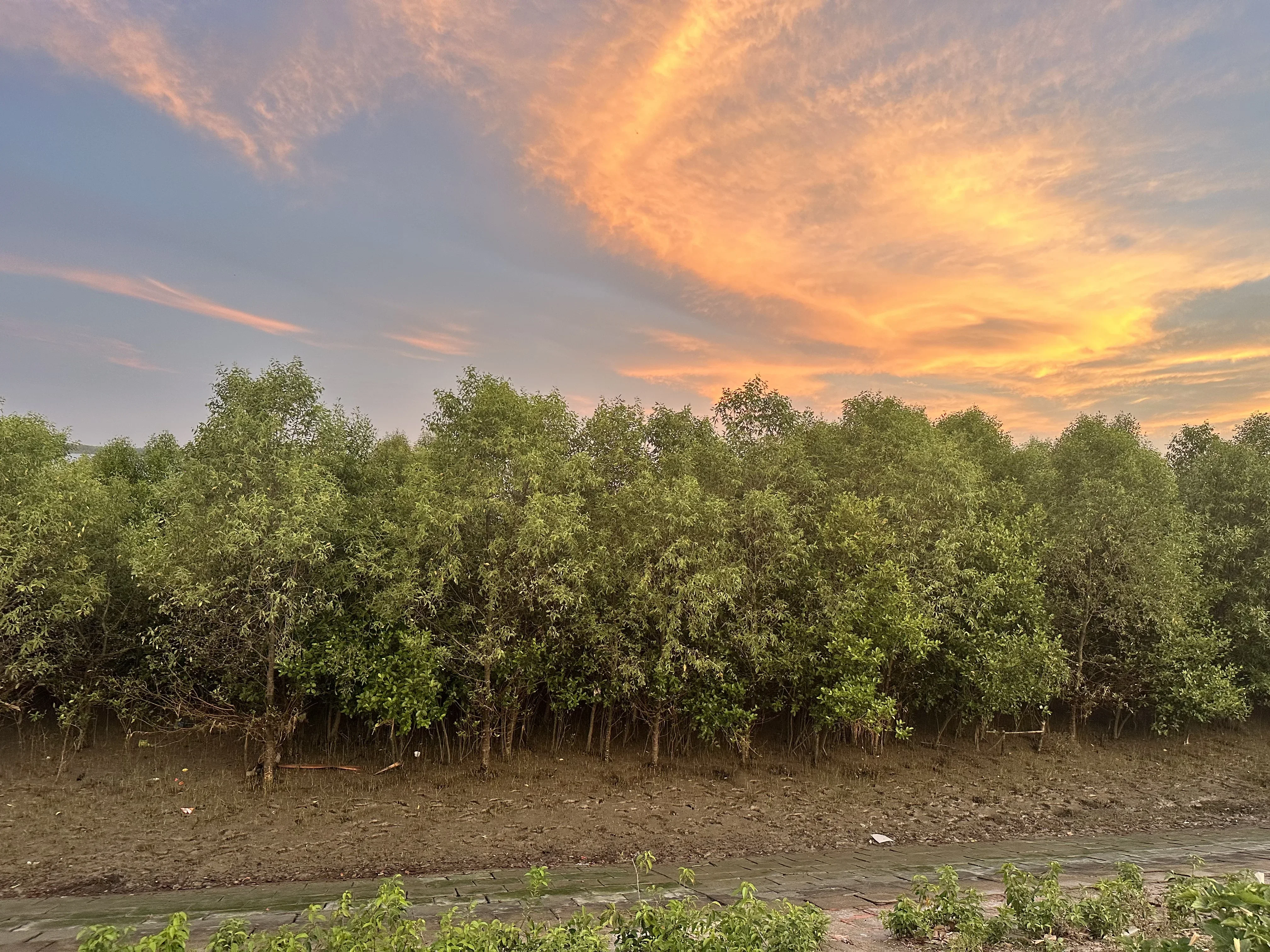
A long belt of full-grown mangroves along the Raimangal River beside the embankment.
A mile of full-grown mangroves along the Raimangal River, protecting the embankment.
Full-grown mangroves along the opposite stretch of the Raimangal River.
Mangroves growing along the riverbank of the Raimangal.
Mangroves growing along the riverbank, forming a living edge between river and land.
A mangrove belt along the riverbank protecting the land from tidal waves and flooding.
Mangroves acting as a natural shield, protecting the land from tidal waves and flooding.
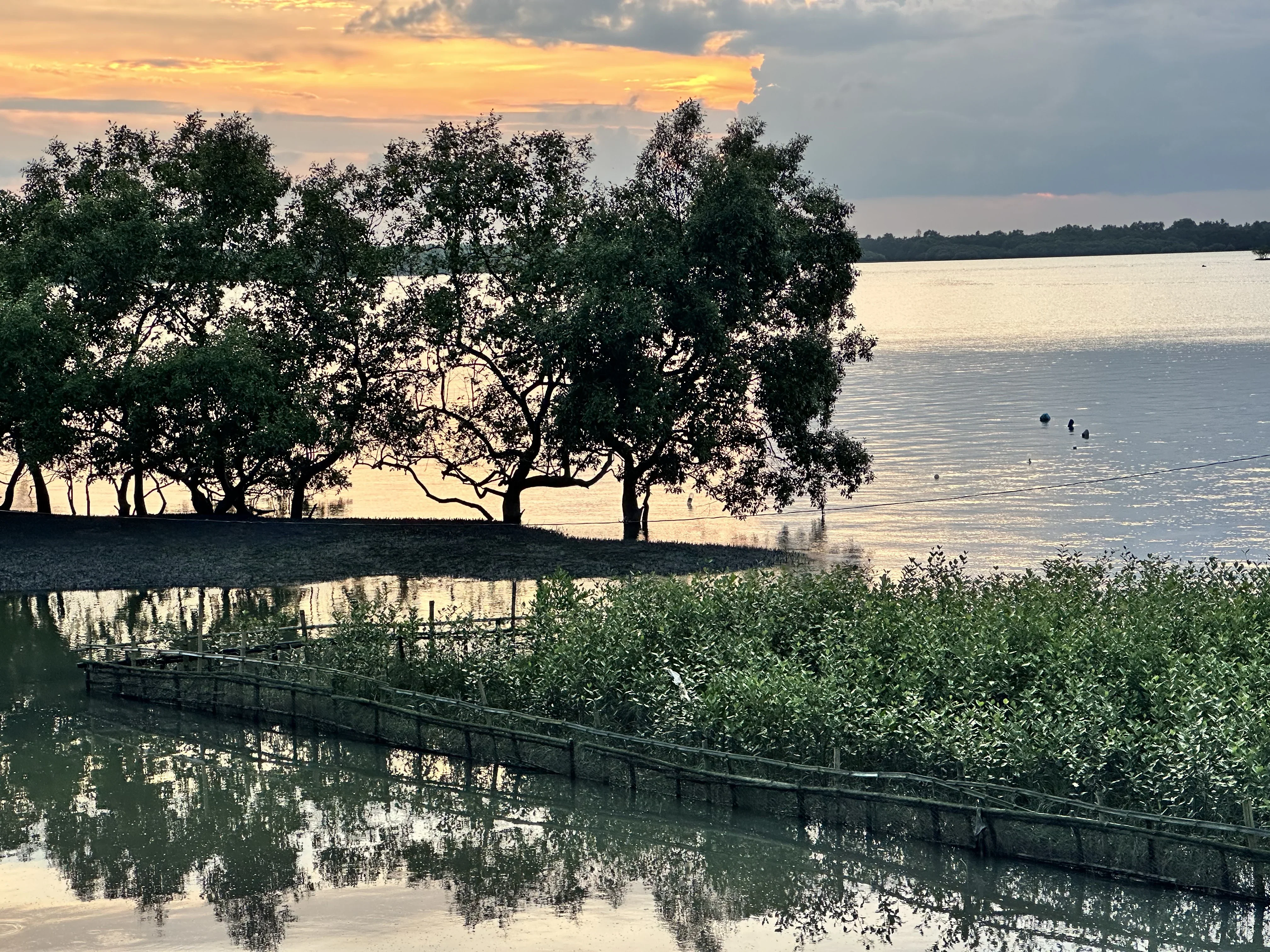
Mangrove growth along the riverbank at twilight.
The mangrove belt along the Raimangal River at twilight.
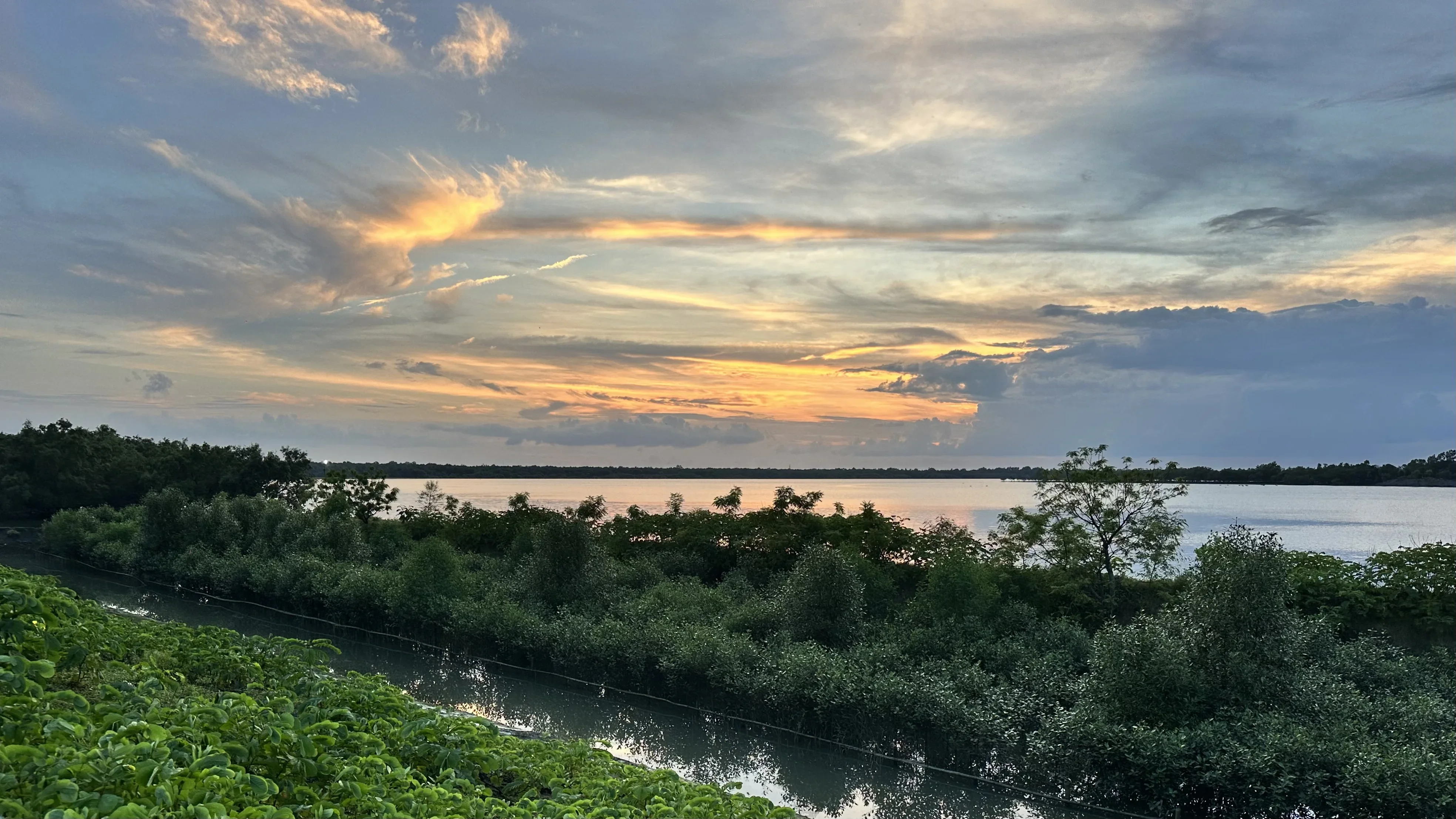
Established mangroves along the riverbank in the fading light.
Established mangroves along the riverbank, seen in the fading light.
Full-grown mangroves beside the embankment road along the Raimangal River.

A living landscape

Restoration is a relationship between forest, river and community

The work is not simply about planting trees. It is about giving a living landscape the conditions and care it needs to return — and allowing the forest, river and people of the Sundarbans to remain connected.

Sound off