
Culture
Reviving Traditional Music & Art
Documenting, preserving and supporting traditional music and cultural practices of the Sundarbans.
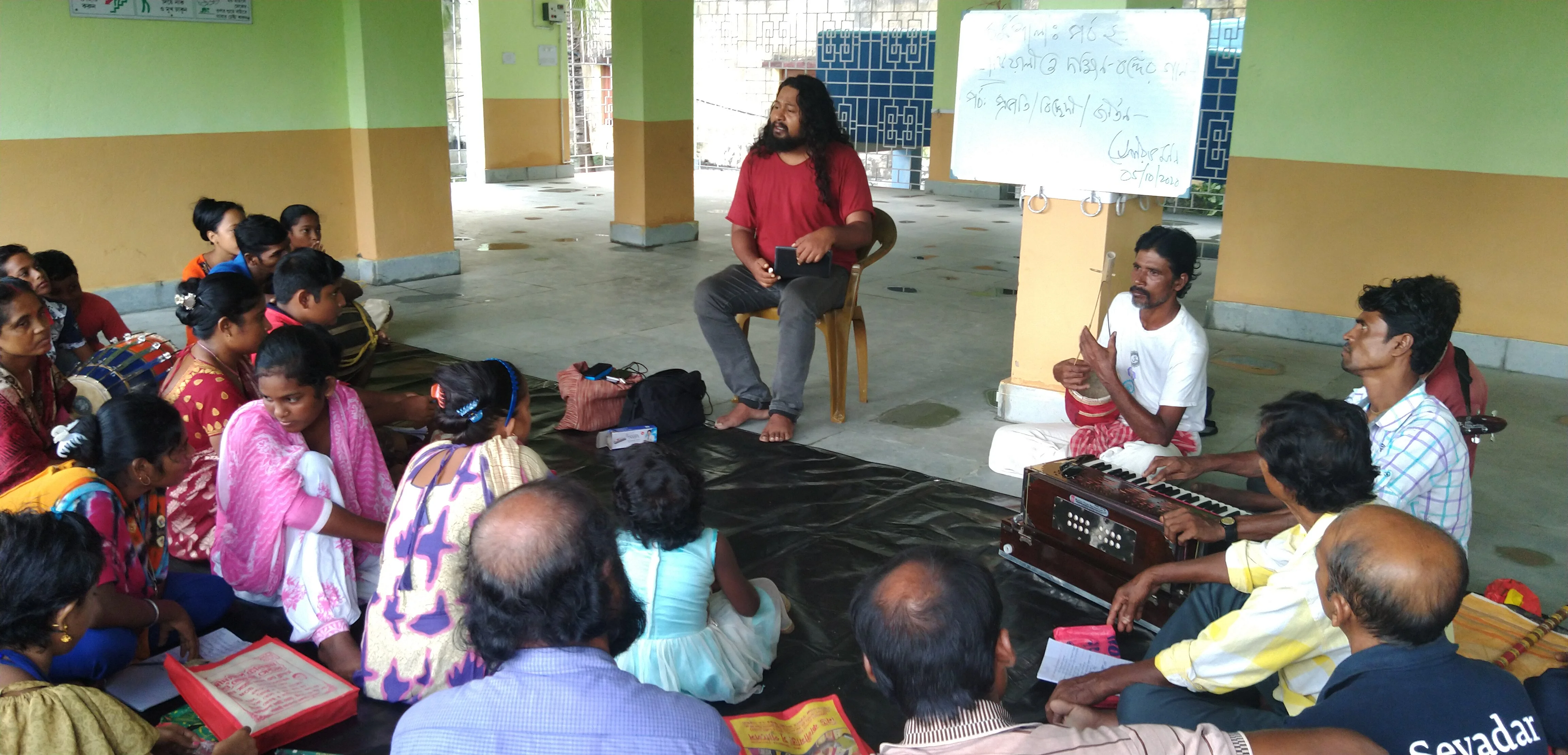
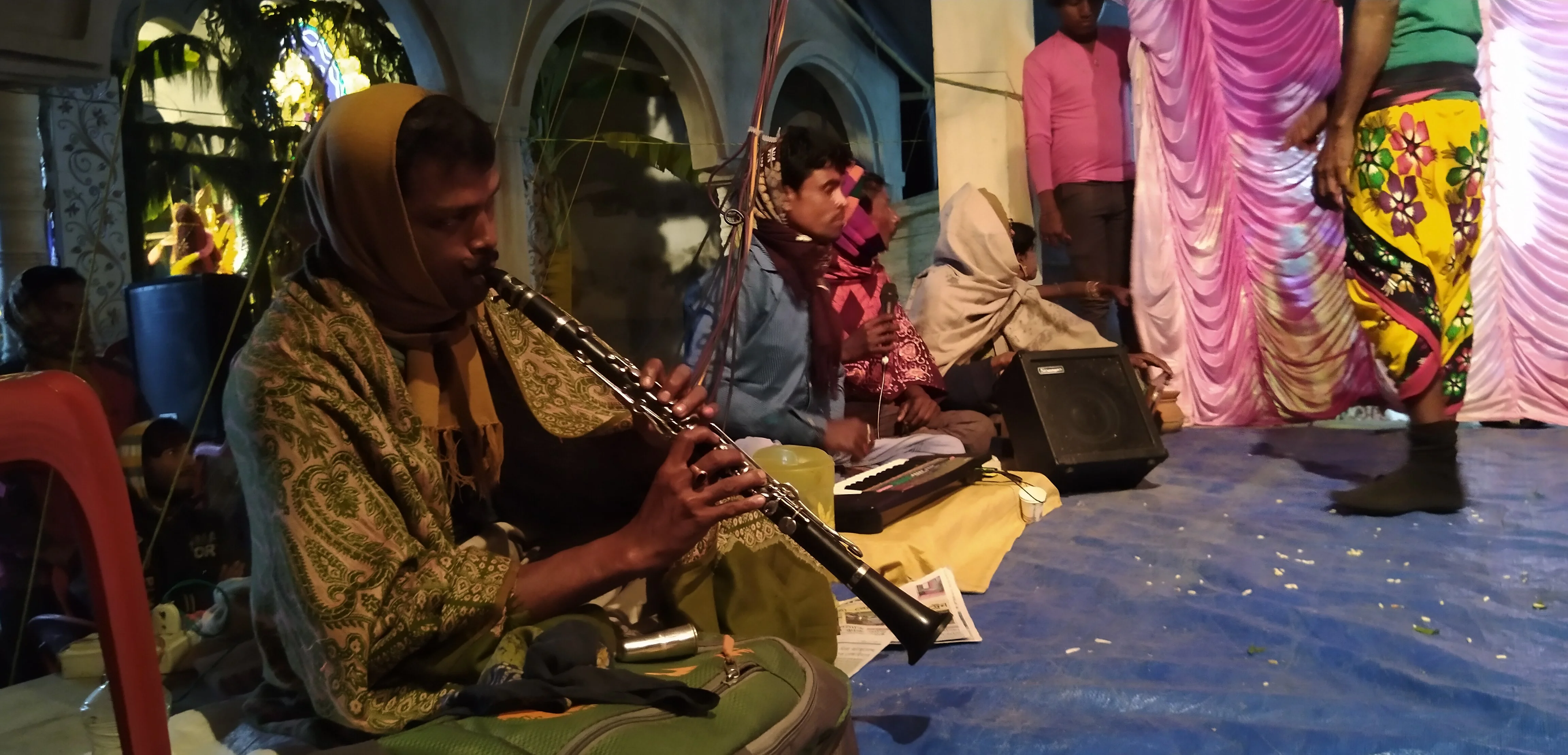
Traditional music in the Sundarbans is inseparable from the landscape in which it is made. Songs travel with boats, across riverbanks and between generations. They carry memories of work, migration, devotion, love, danger and life with the tides.
Breathing Roots works to document and sustain these cultural practices while supporting the people who continue to carry them.
Music as a living archive
For Breathing Roots, cultural preservation is not simply the collection of old recordings or the storage of historical material. A tradition remains alive when people continue to sing it, perform it, teach it and adapt it.
The musical traditions of the Sundarbans are therefore understood as living forms of knowledge. Their words and melodies carry memories of places and occupations, relationships with rivers and forests, and ways of understanding a landscape shaped by water and uncertainty.
Documentation can help preserve these memories, but documentation alone is not enough. The continuation of a tradition depends on transmission: on people hearing songs, learning them, performing them and passing them onward.
Songs of the river and the forest
The musical culture of the Sundarbans includes traditions associated with river life, devotional practice and everyday labour. Bhatiali, Sari and Jari songs, among other forms, are part of a wider cultural landscape in which music has historically accompanied movement, work, storytelling and collective experience.
The river is not simply a setting for these traditions. It is part of their memory and imagination.
This relationship between landscape and song is central to the cultural archive that Breathing Roots is trying to build: an archive in which music remains connected to the people, places and experiences from which it emerged.
Documentation and transmission
Breathing Roots supports the documentation of songs, performances and cultural practices while creating opportunities for their continued transmission.
This work includes recording and preserving cultural material, supporting musical practice and making these traditions more visible to younger generations and to wider audiences.
The aim is not to freeze a tradition at a particular historical moment. It is to create conditions in which cultural knowledge can continue to move.
Saurav Moni
Saurav Moni’s work offers one way of understanding this approach.
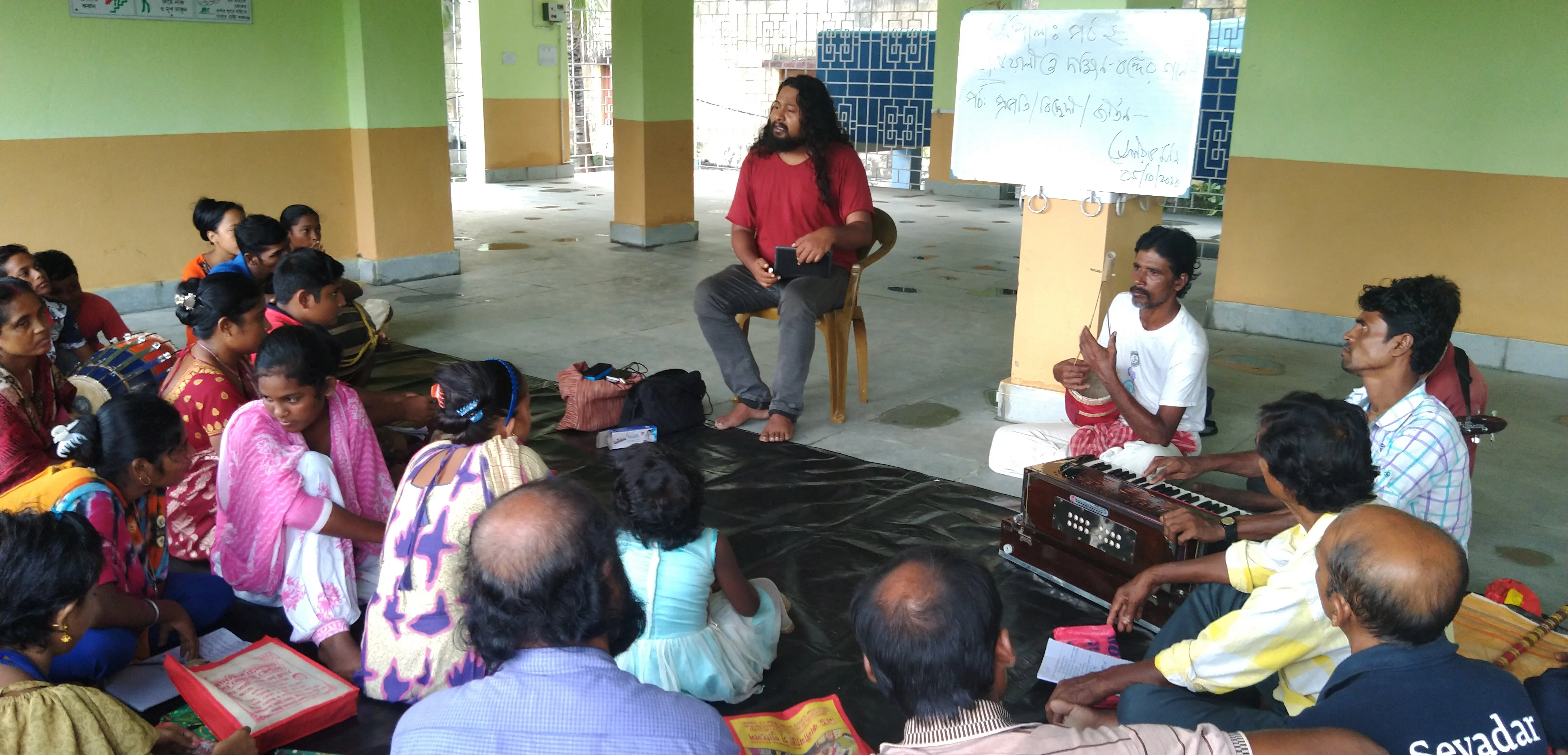
A singer, performer and cultural practitioner rooted in the Sundarbans, he carries a repertoire shaped by the region’s riverine and rural life. His work connects performance with memory, teaching and the transmission of musical knowledge.
His story is part of the wider cultural landscape that Breathing Roots documents.
Culture as part of the living landscape
Ecological and cultural preservation cannot be completely separated in a place such as the Sundarbans.
The same rivers, embankments, villages and forests that shape people’s livelihoods also shape their songs, stories and collective memory. To document the landscape therefore also means listening to the cultural practices through which people remember and interpret it.
Breathing Roots sees music and art as part of this living landscape.
The archive is not intended to be a museum of disappearing traditions. It is an attempt to keep memory connected to practice, place and people.
Archive
From the archive
Photographs from the Breathing Roots archive connected with this project.
culture music
0283
Saurav Moni conducting a music class.
culture music
0289
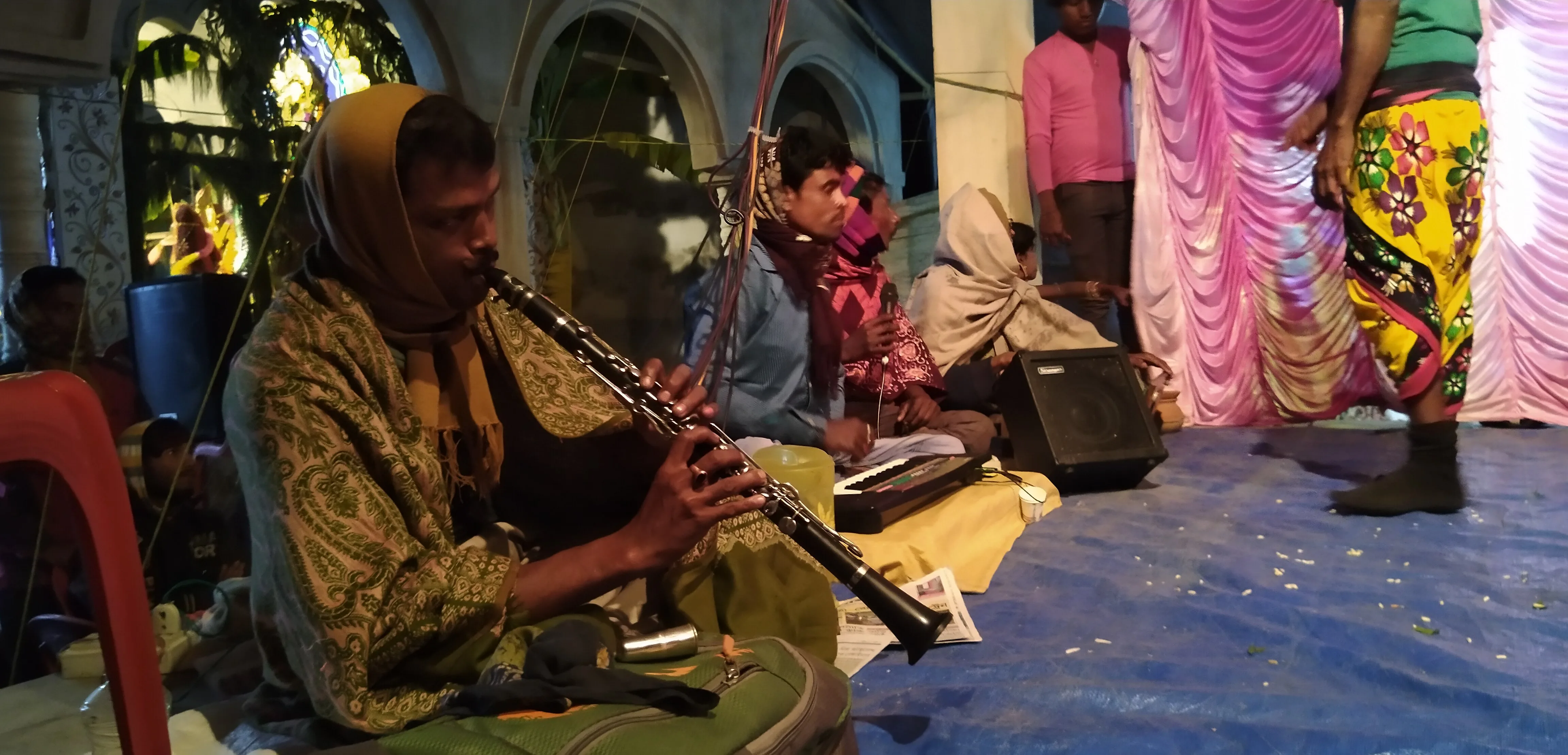
Musicians playing shehnai.