
artist profile
The Voice of the River: Saurav Moni and the Sonic Ecology of the Sundarbans
A story of folk music, riverine memory and cultural archiving through the work of Saurav Moni, a folk singer and music researcher from Hingalganj in the Sundarbans.
Subject Saurav Moni
Place Hingalganj, Sundarbans, West Bengal
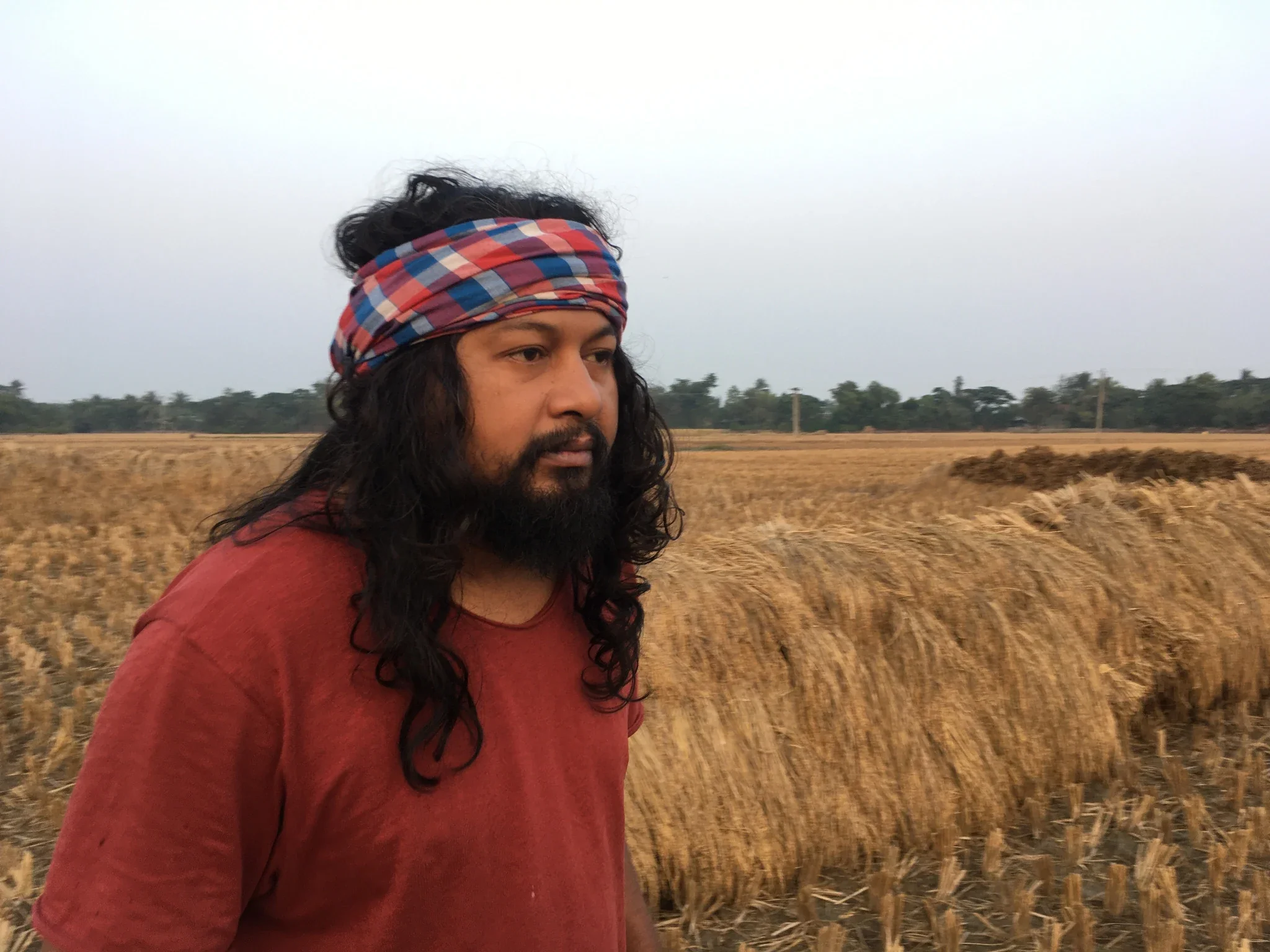
A voice shaped by the river
Saurav Moni is a folk singer and music researcher whose work is deeply connected to the riverine landscape of Bengal. He comes from Hingalganj in the Sundarbans, close to the India–Bangladesh border, and his musical practice grew from an intimate relationship with the songs, people and landscapes of the delta.
His work is particularly associated with Bhatiali — the river songs traditionally connected with boatmen — but his repertoire extends across several Bengali folk traditions, including Sari, Jari, Baul, Murshidi, Marfati and other forms of rural and devotional song.
From memory to archive
Much of the traditional music of Bengal has historically circulated through oral transmission rather than formal recording.
Moni’s work as a singer and researcher is therefore also an act of preservation. He has travelled among boatmen, rural communities and folk performers, learning songs and carrying them into new contexts while retaining the distinctive language, melodic character and regional memory of the traditions.
This makes performance itself part of an archival practice.
The archive is not only a collection of old recordings. It also lives in the continuing ability of people to remember, perform and transmit songs.
The river as musical landscape
Bhatiali occupies a central place in Moni’s work.
The tradition is closely associated with the experience of travelling by boat and with the movement of rivers through the Bengal delta. Its songs can carry loneliness, longing, devotion and reflection, while the river becomes both a physical landscape and a metaphor for human life.
For a singer from the Sundarbans, this relationship between landscape and song is not simply historical. Rivers, boats, tides and changing shorelines remain part of everyday experience.
Boatmen, journeys and Bengal
One of Moni’s important creative projects has been the Boatmen Band, also known as Majhi Mallah.
The project uses the image of a travelling group of boatmen to connect different musical traditions across Bengal. Its imagined journey moves from northern to southern Bengal, following changing river landscapes and the musical forms associated with different regions.
The project creates a meeting point between older traditions and contemporary performance, allowing music that has often remained outside mainstream cultural circulation to reach new audiences.
A living cultural archive
Moni’s work demonstrates why cultural preservation cannot be separated from living communities.
A song can survive as a recording, but it also survives through the people who know when it should be sung, how it should sound and what landscape or memory it belongs to.
The work of documenting folk music therefore becomes inseparable from questions of livelihood, transmission and cultural continuity.
This is the larger significance of preserving the musical traditions of the Sundarbans: the songs carry not only melodies, but ways of remembering the river, the village and the changing relationship between people and place.
Related work
This story is connected to Breathing Roots’ Reviving Traditional Music & Art programme, which supports the documentation and continuation of folk traditions and the communities that sustain them.
Archive
From the archive
Photographs from the Breathing Roots archive connected with this story.
culture music
0283
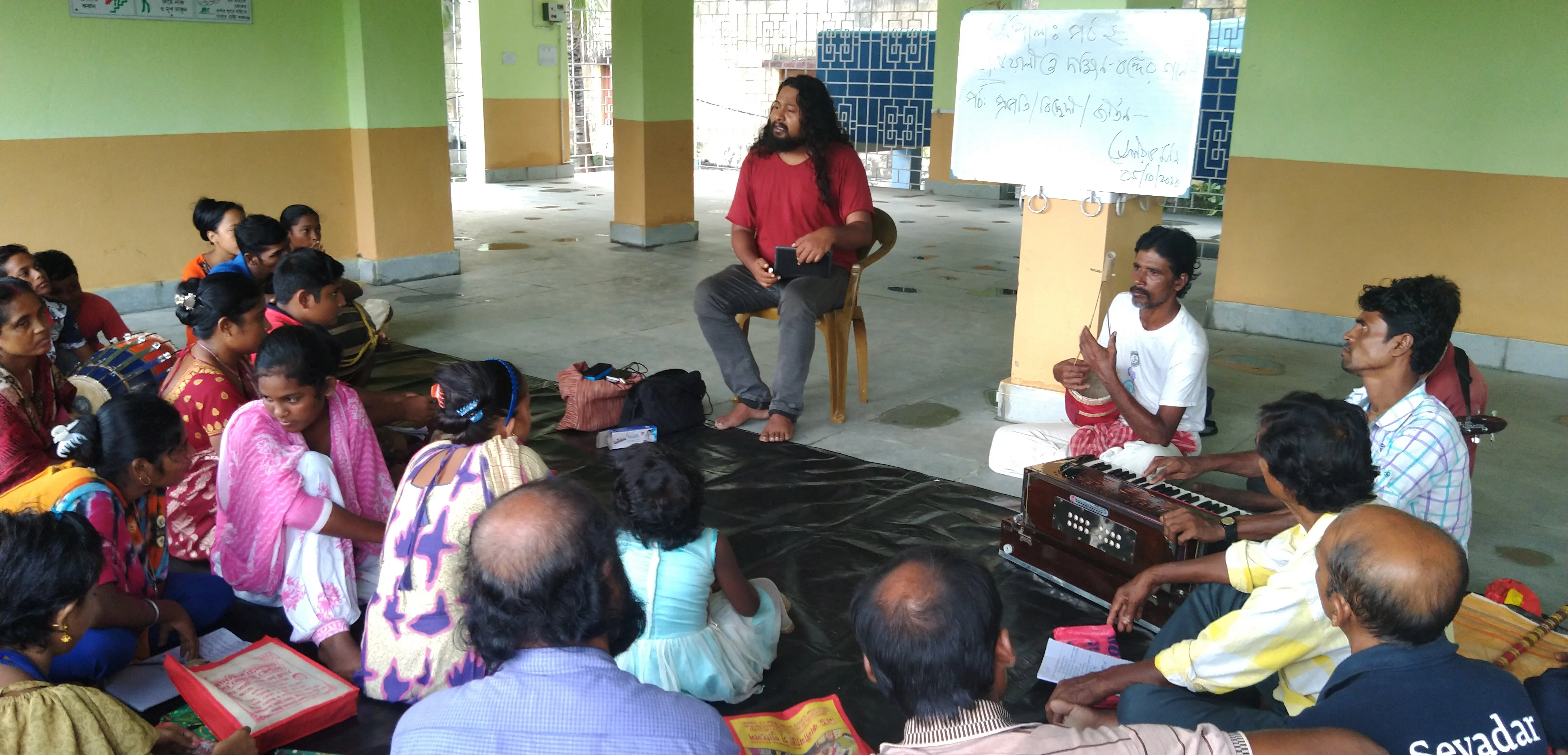
Saurav Moni conducting a music class.
culture music
0289
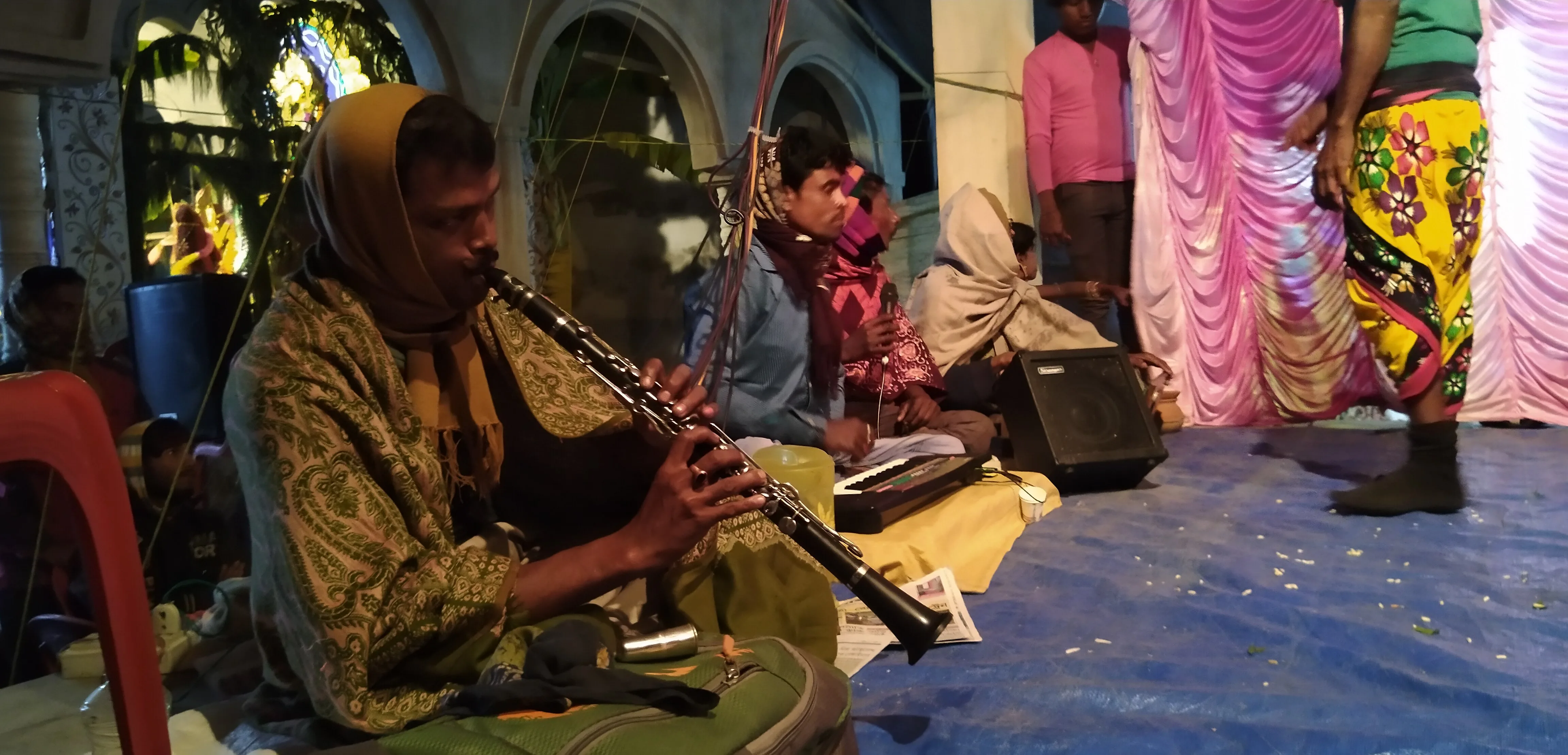
Musicians playing shehnai.